Continuing the exploration developed in Portraying the Universe, Irina Gabiani’s works of 2025–2026 extend her investigation into the relationships between images, structures and the wider world. Earlier ideas return in new forms, acquiring different functions as they connect with other elements. Presented at Raffaella De Chirico Gallery in Milan, Every Object in the Sky Looks Like a Star shifts this exploration towards the construction of reality, questioning how images, symbols and narratives shape our perception and become accepted as truth.
Emerging from Gabiani’s reflections on the political situation in Georgia, the exhibition expands towards a broader global condition, examining power, authoritarianism and the mechanisms through which reality is constructed. Its title suggests that what appears luminous or meaningful may depend on perspective and interpretation.
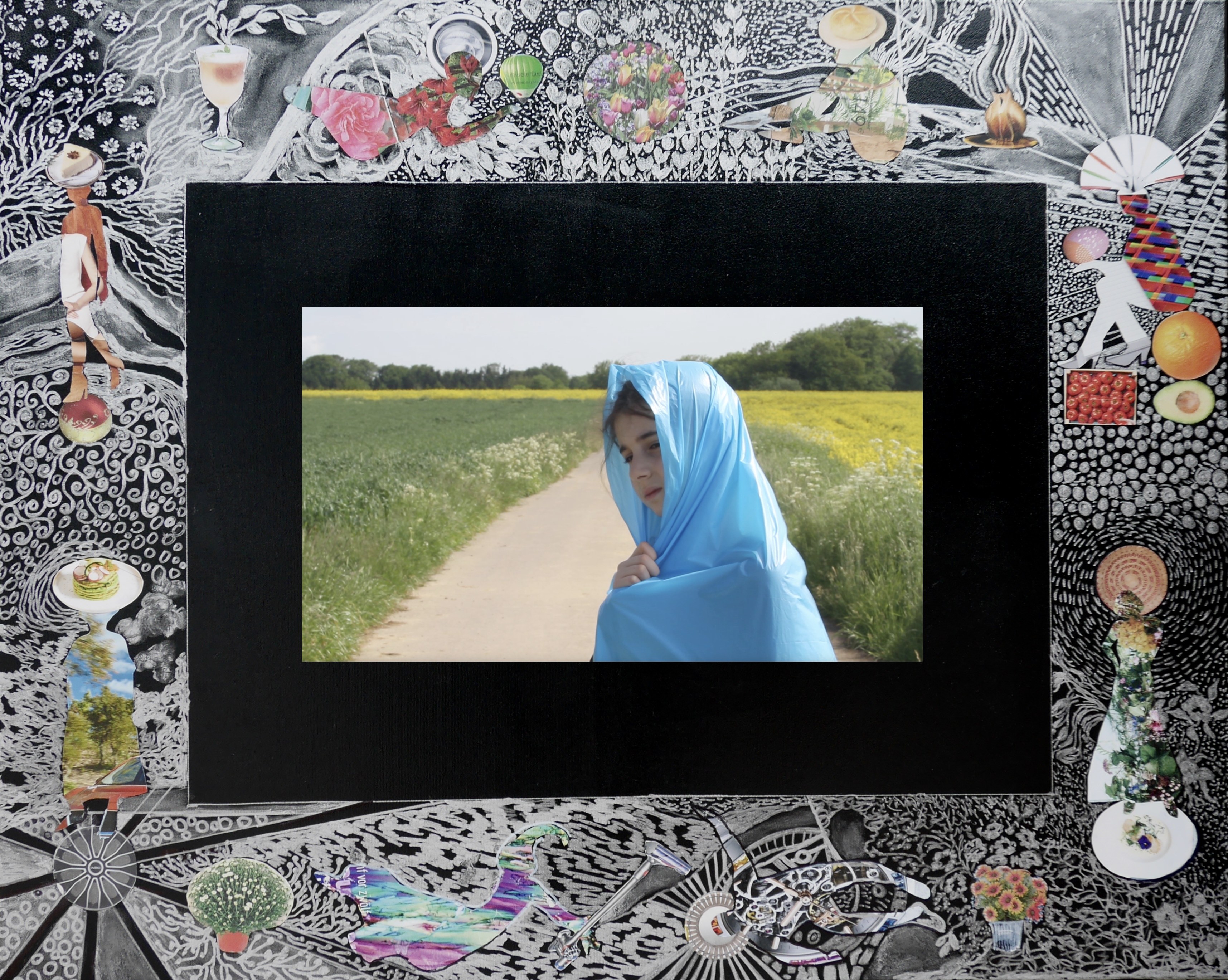
The exhibition opens with a video projection presented within a frame-like painting whose visual language recalls Minimal-Complexity. Combining hand-painted elements, collage and repeated patterns, the work brings together the painted surface and the moving image. The video shows the artist’s daughter walking across a yellow field, wearing a veil-like form made from a long plastic bag that trails behind her. This silent image evokes the ecological, social and symbolic burdens passed on to future generations by existing structures of power.
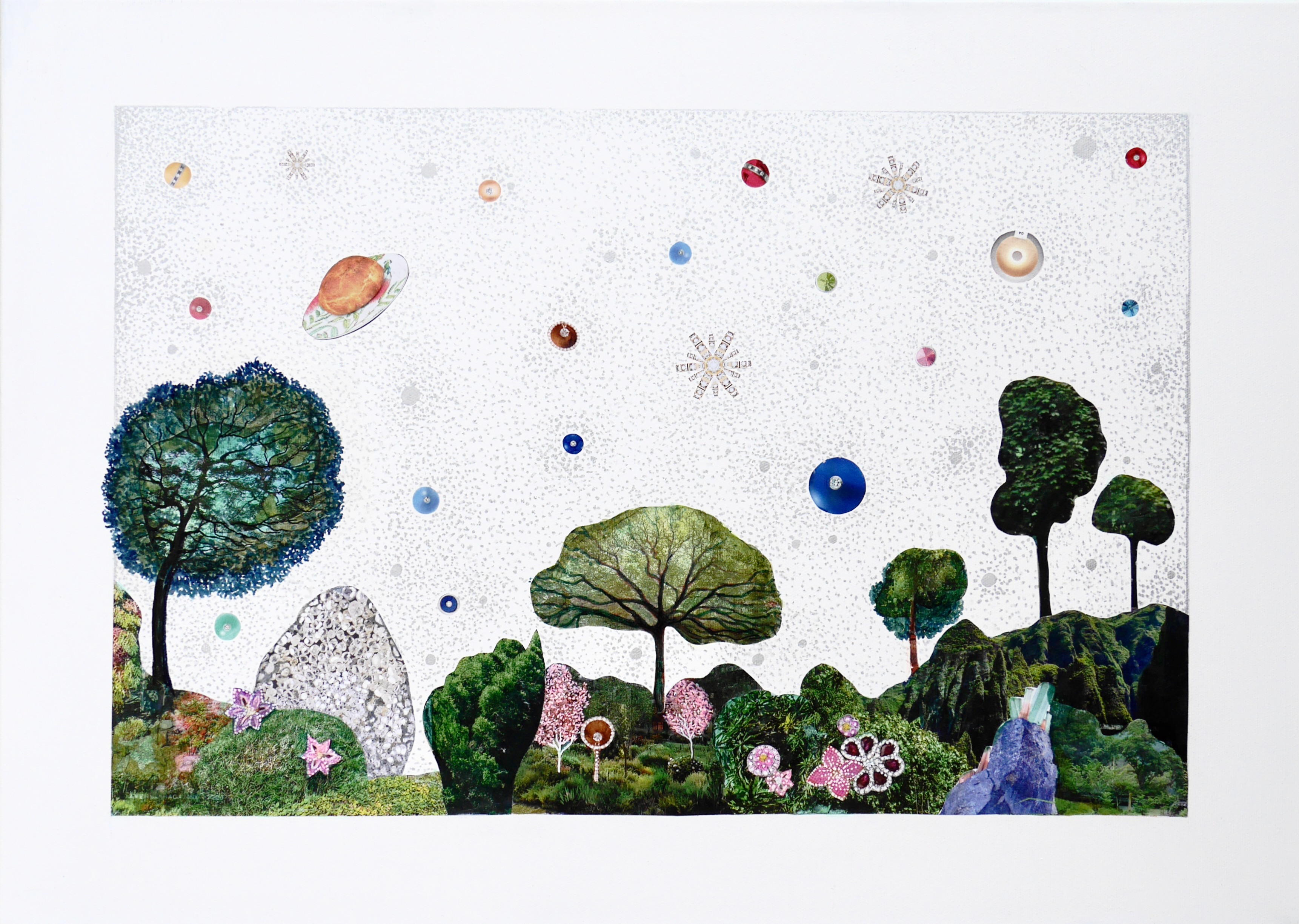
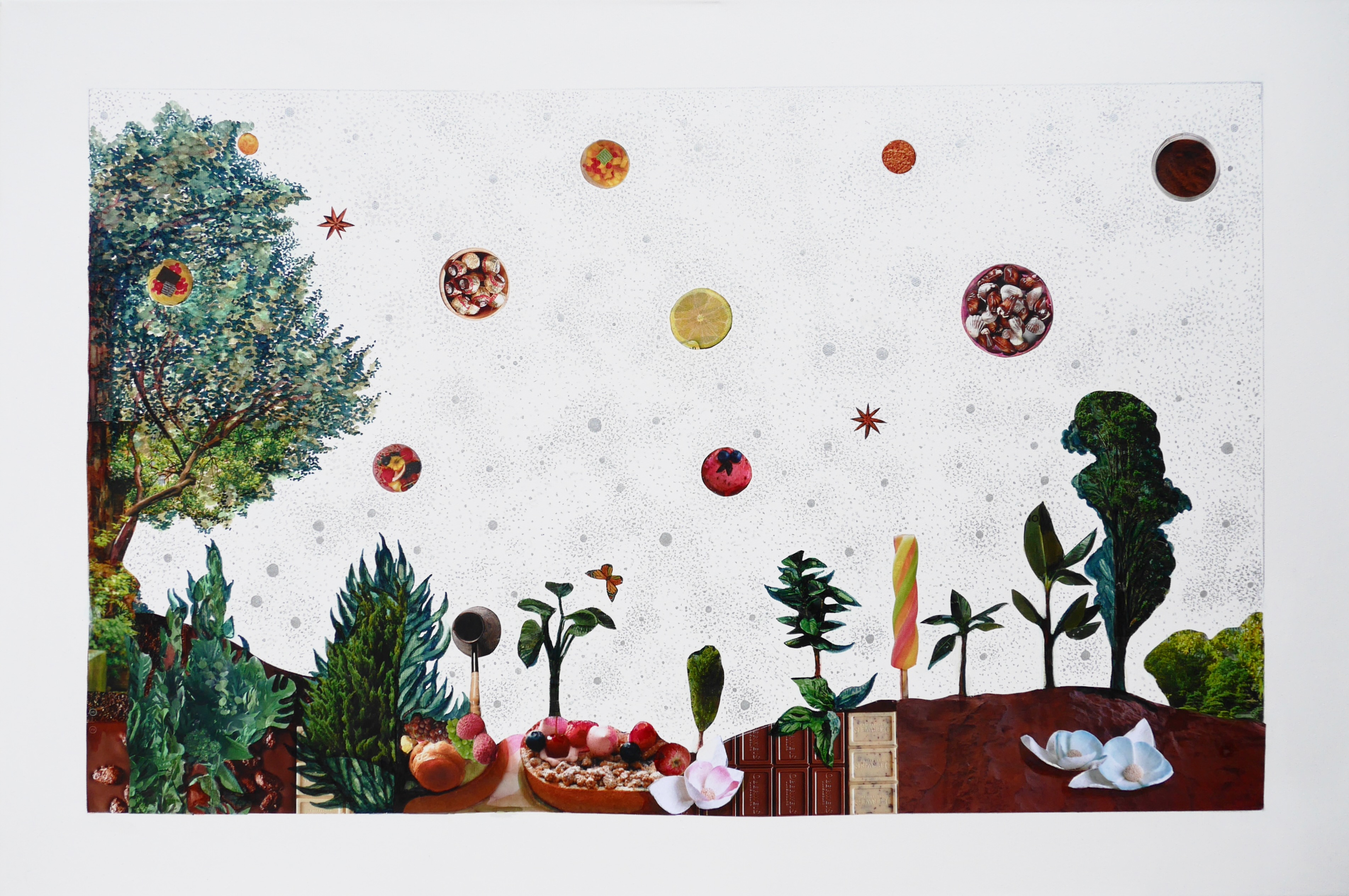
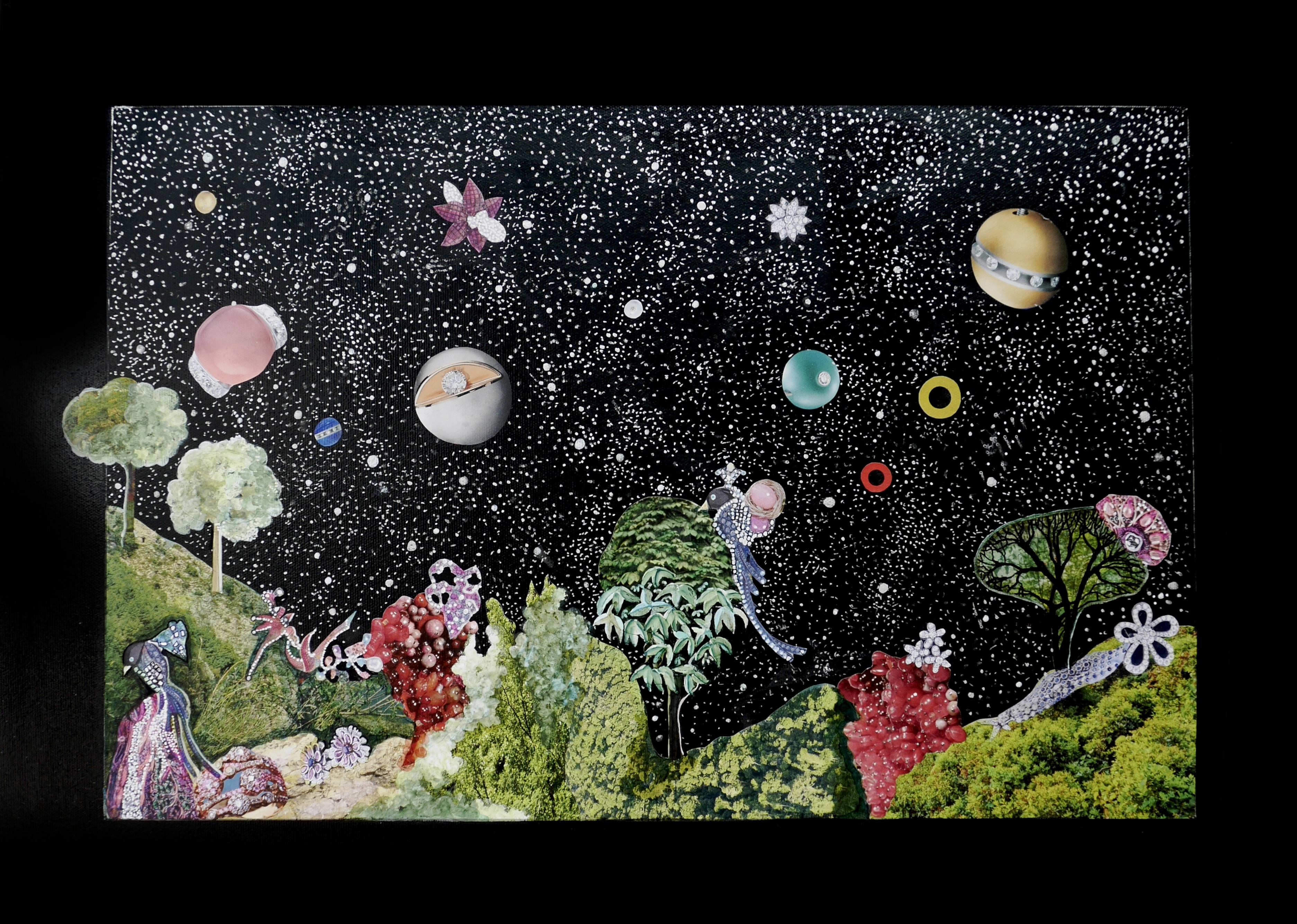
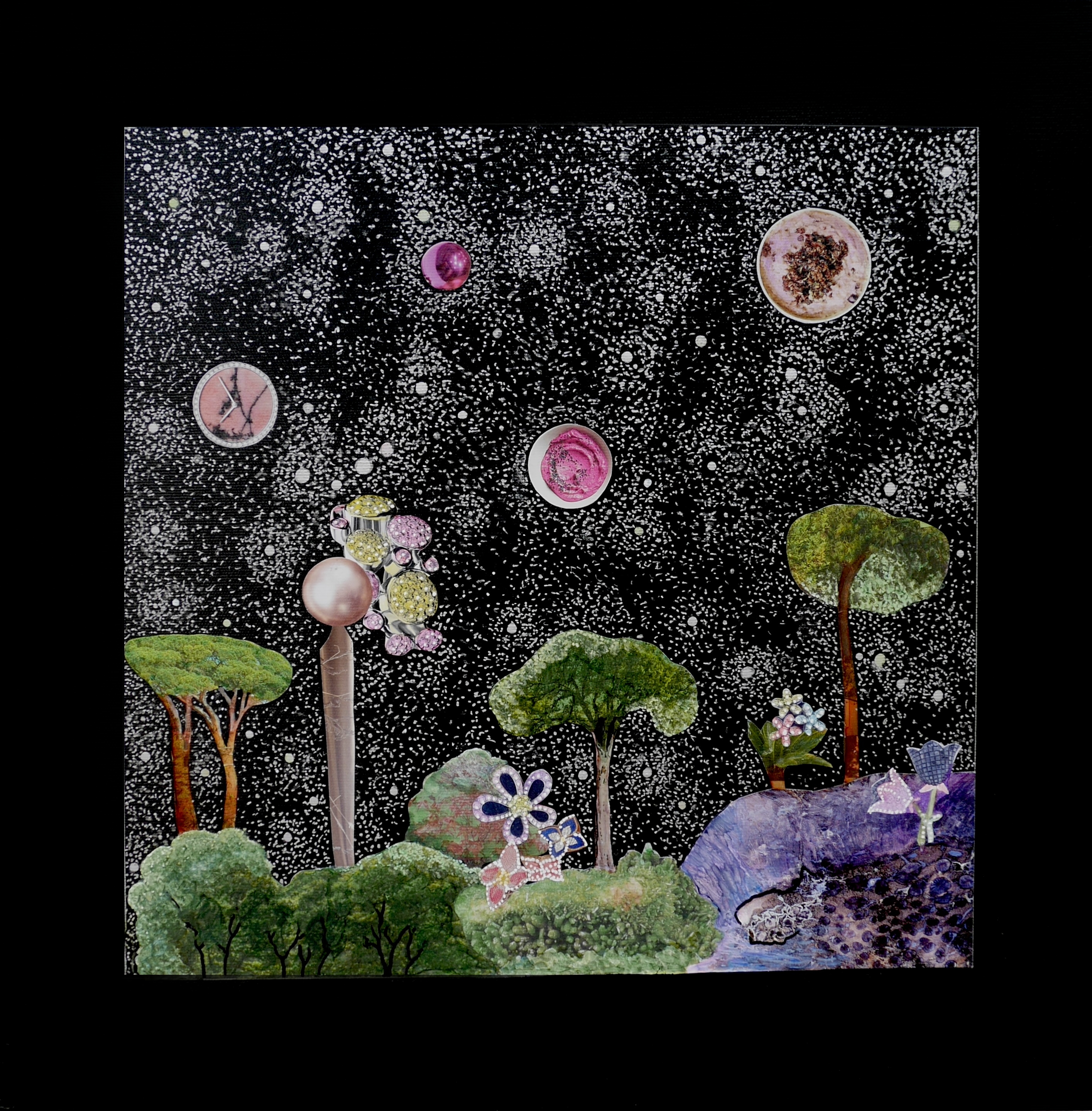
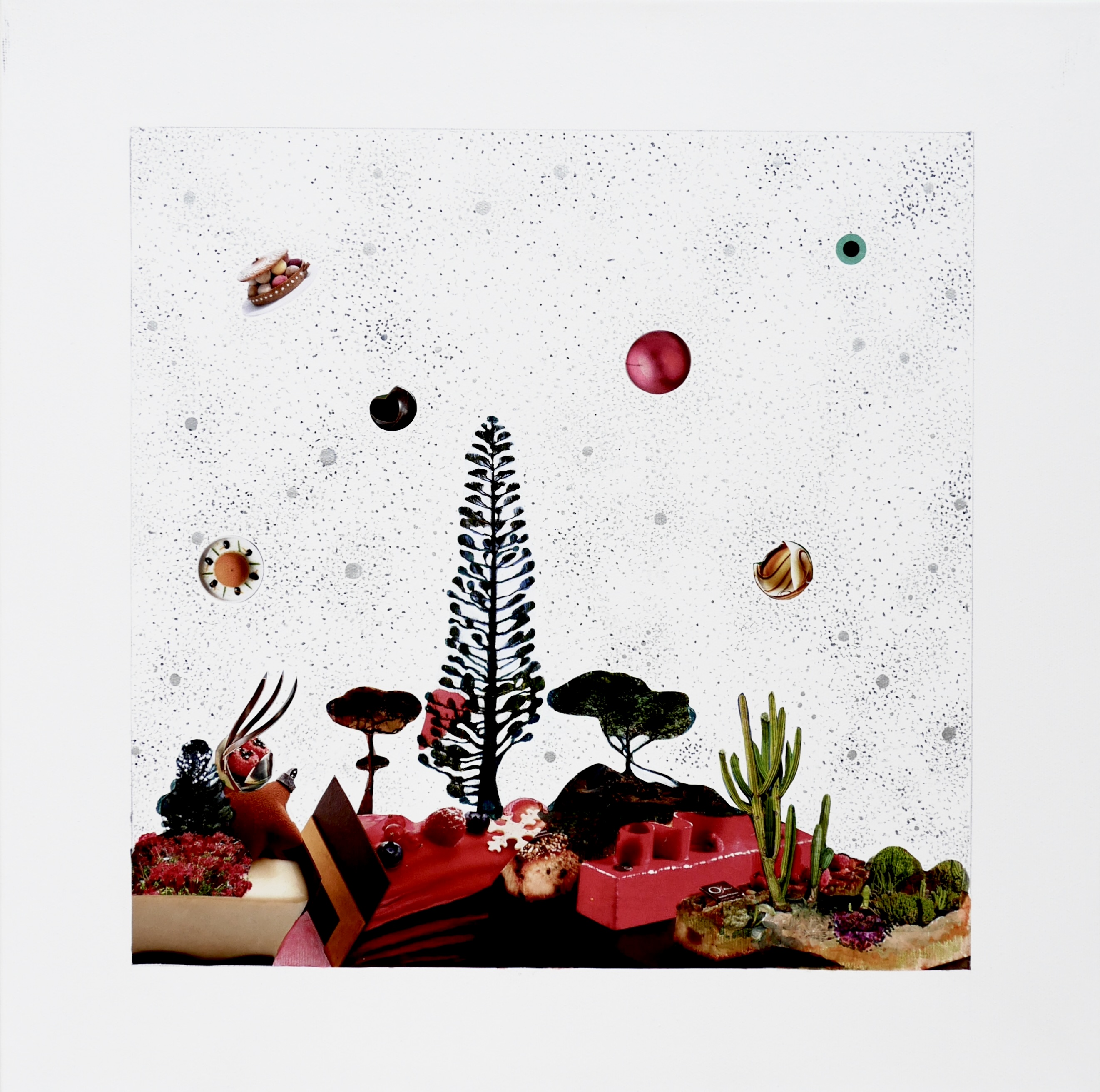
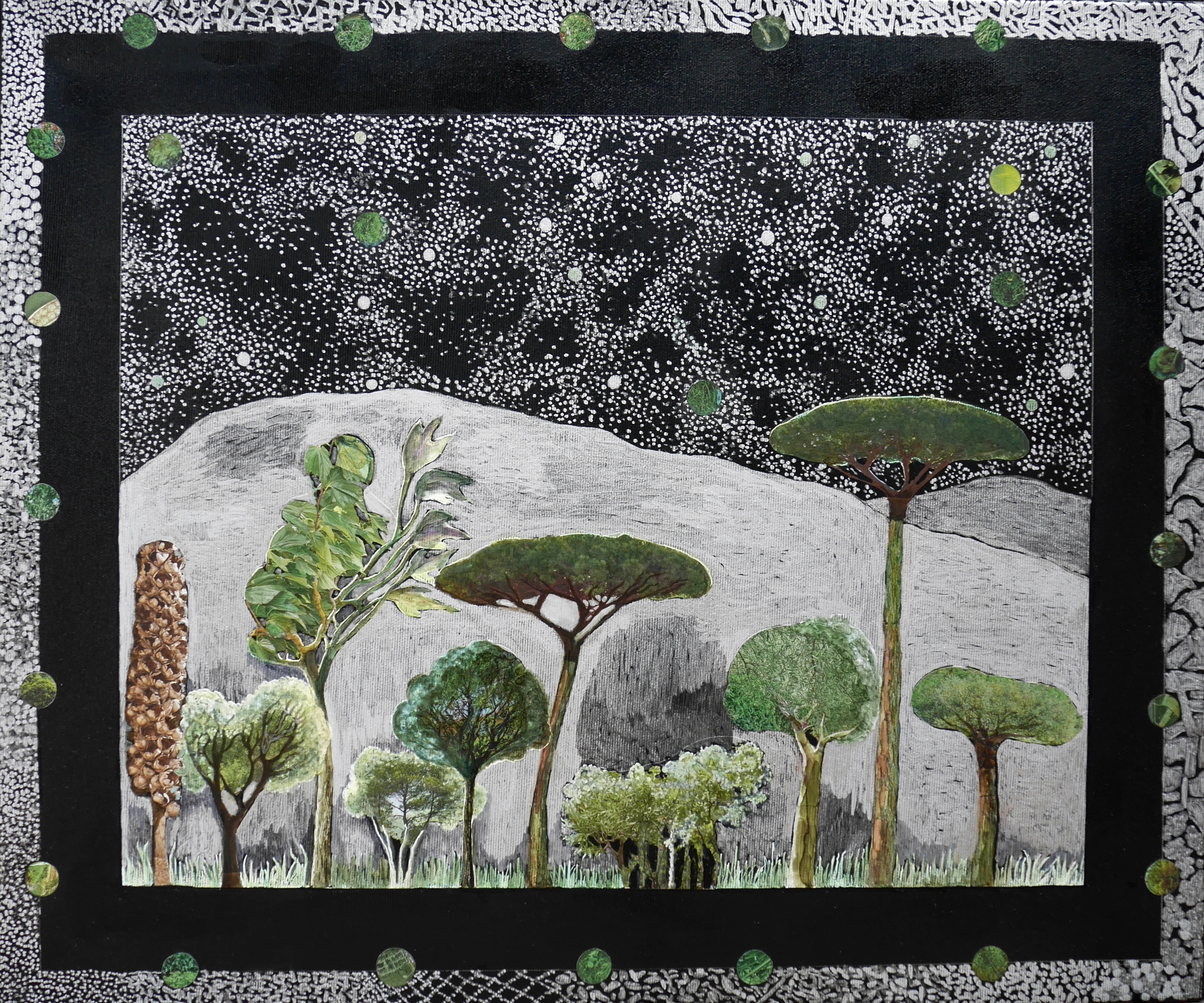
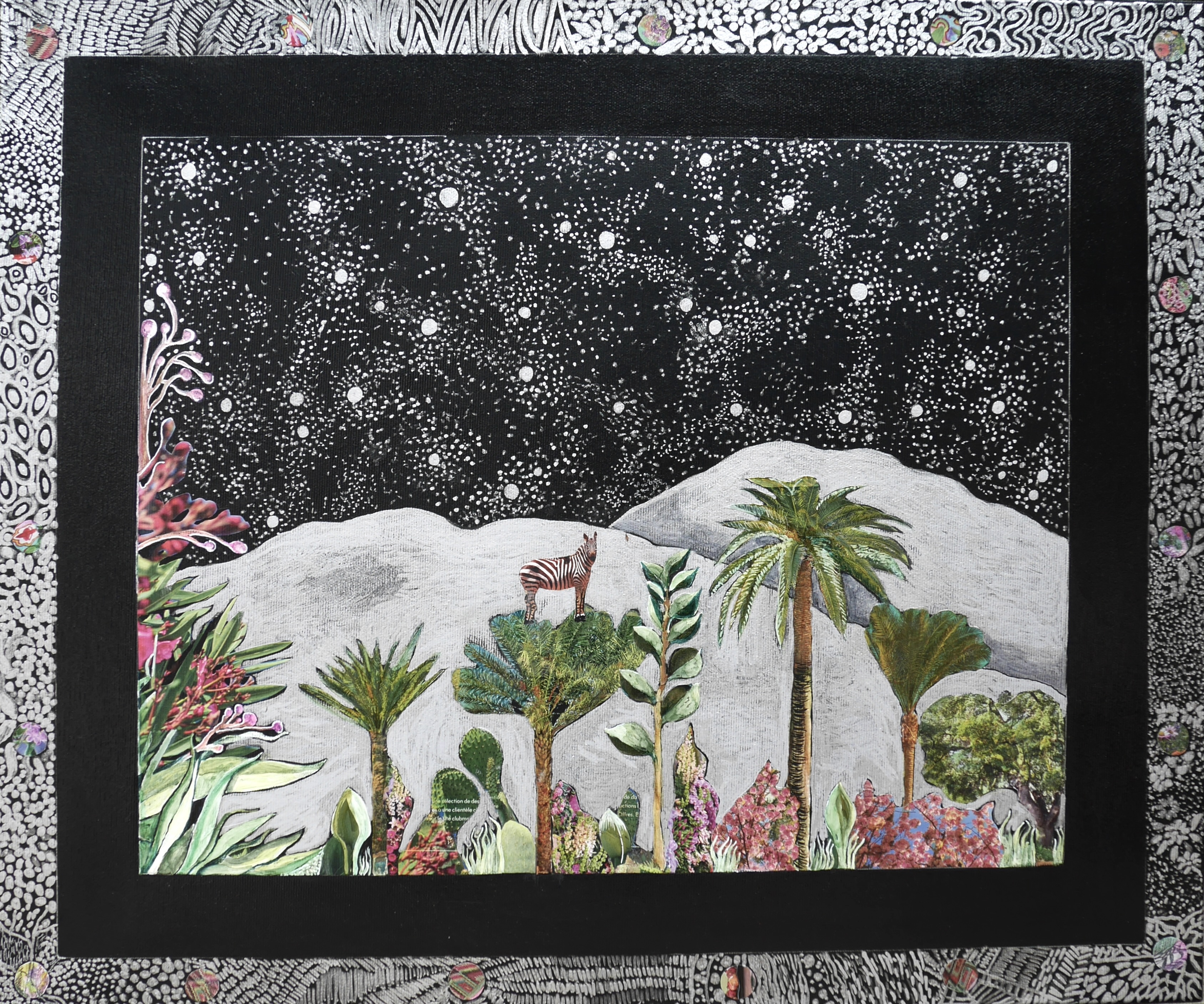
The works combine painting, collage, photography and drawing through evolving processes of image-making. In the landscape paintings, photographic elements such as trees are partially retained and then continued through painting. Gradual transitions blur the boundary between the original photograph and the painted surface, allowing the painted forms to extend into patterns and become part of the landscape itself.
The frame-like structures developed in these works continue the exploration initiated in Minimal-Complexity. Created directly on the canvas through Crawling Pattern, they are not separate frames but integral parts of the composition. The pattern becomes both a boundary and a connecting structure, extending the visual language of one project into another.
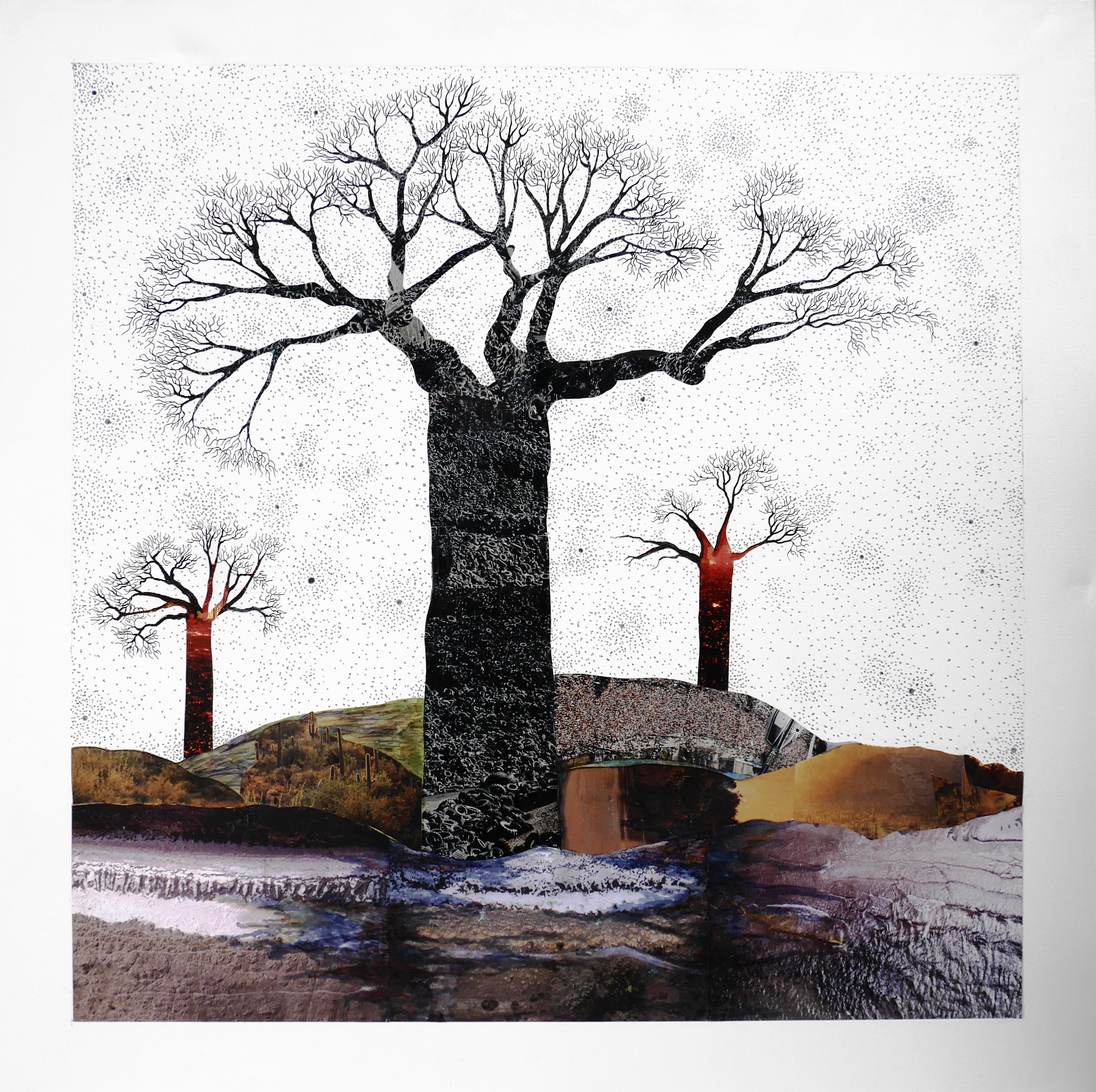
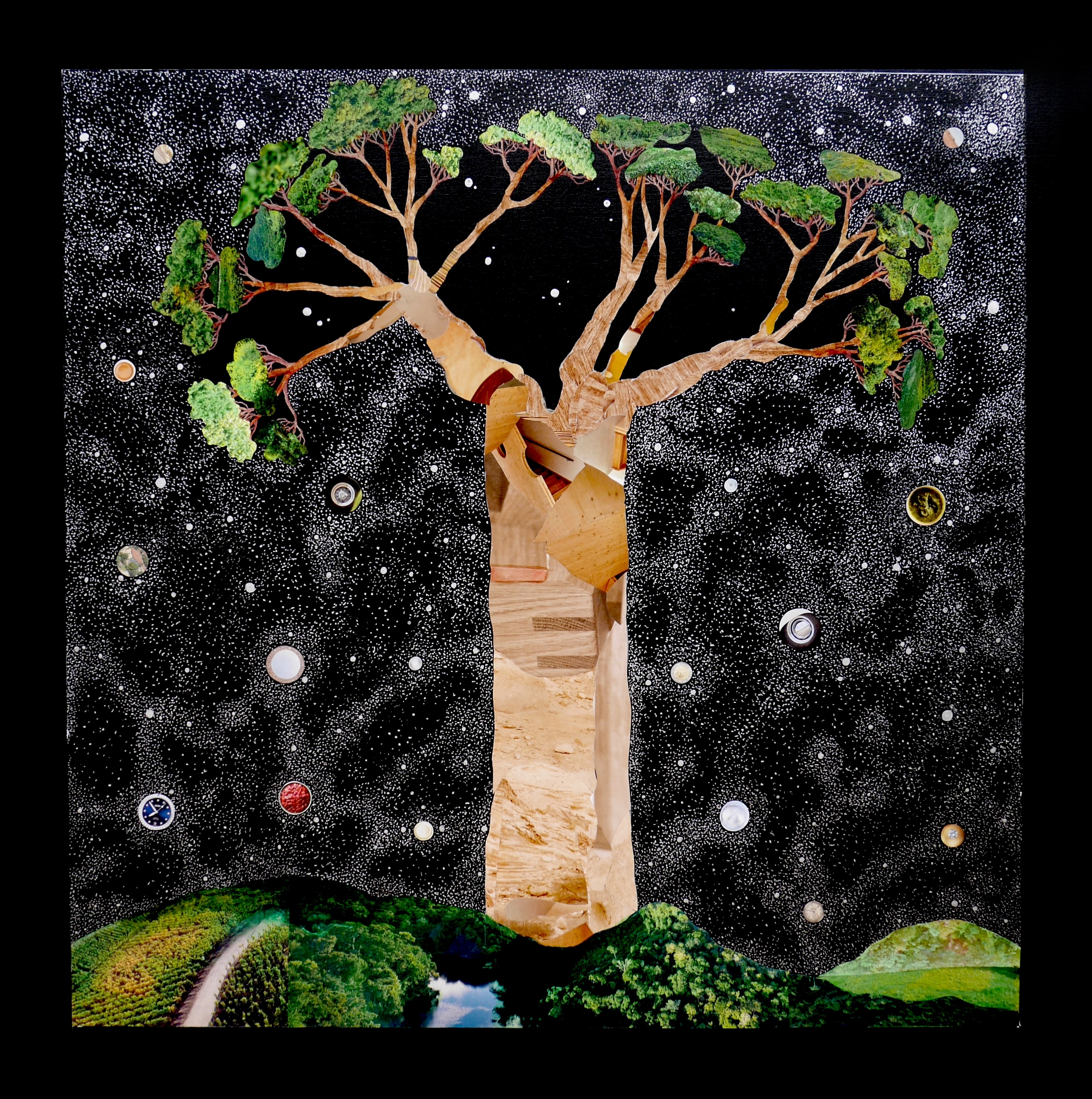
This transformation is particularly evident in the two monumental baobab works that bring the exhibition to its culmination. Both trees were first drawn, then constructed internally from numerous small magazine fragments glued individually onto the surface. In the dry, hollow baobab, fragments from a single page depicting car tyres are cut into tiny pieces and reassembled within the tree. The original image becomes almost unrecognisable. The second, lush-looking baobab is built through a similar process, using different fragments to create an apparently abundant form. Together, the trees contrast collective memory and resistance with the constructed appearance of vitality.
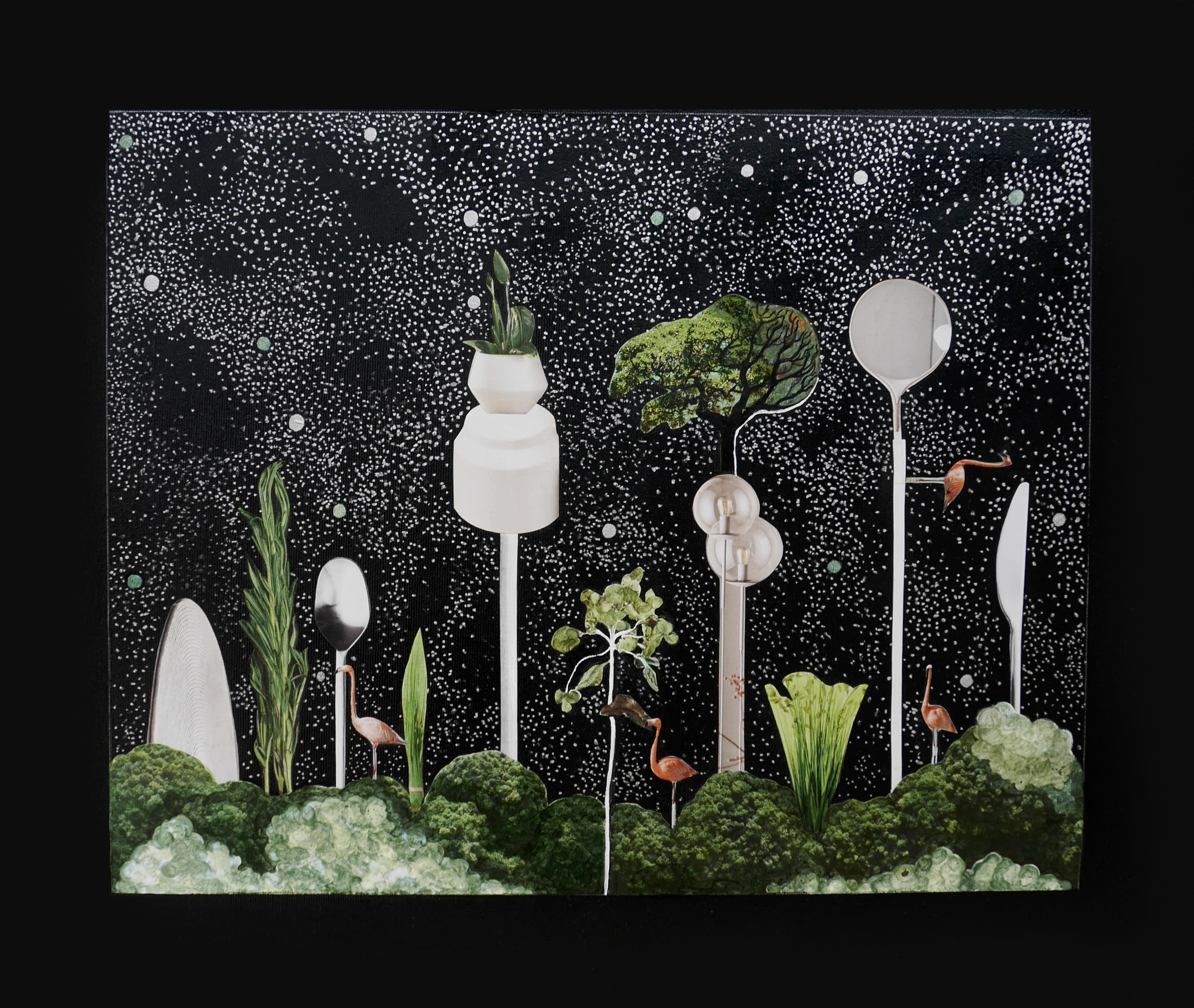
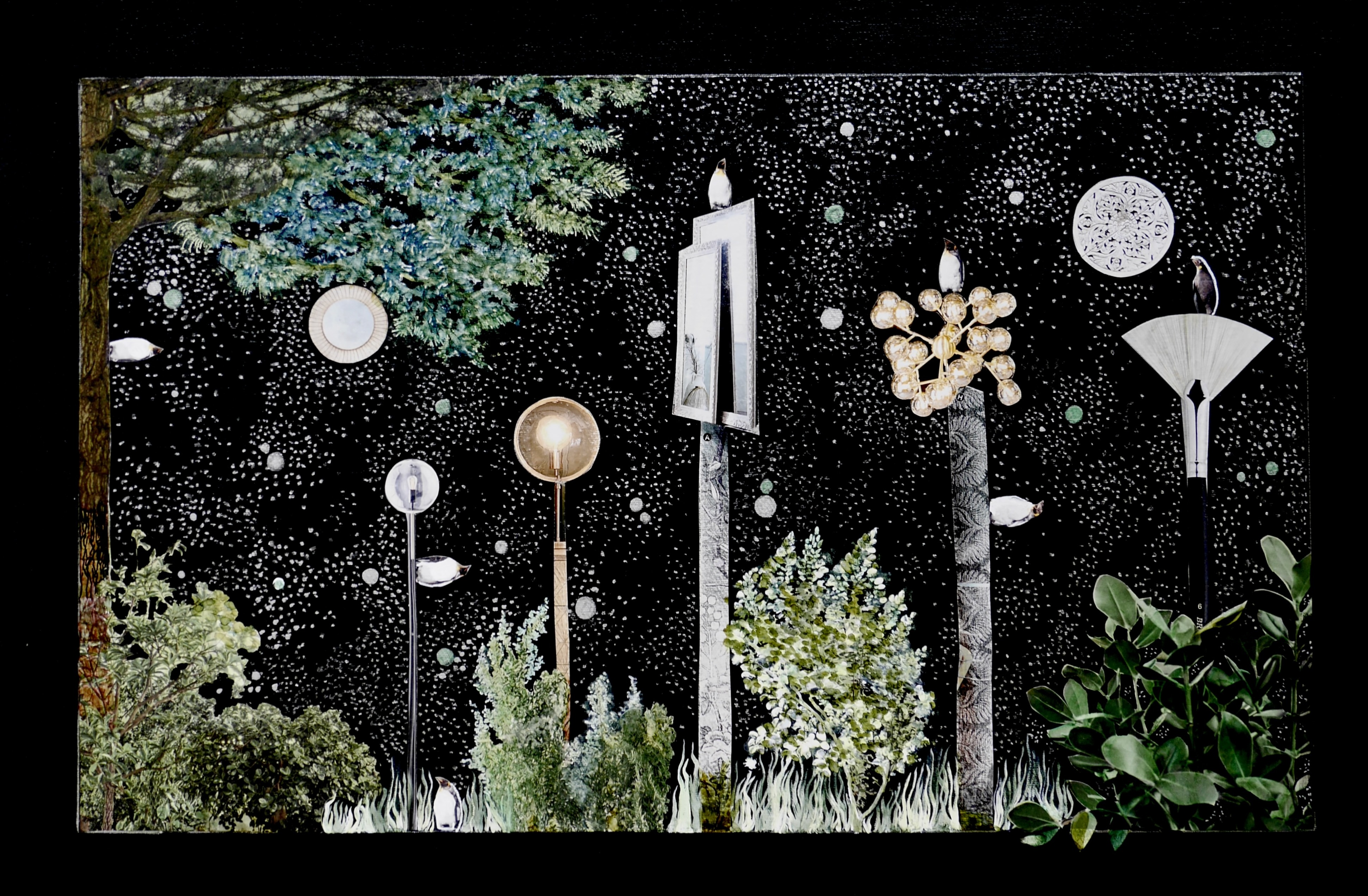
In We Are Not Your Zebras, We Are Not Your Flamingos and We Are Not Your Penguins, animals appear in displaced environments, challenging imposed hierarchies and the control of living beings. In We Are Not Your Penguins, the animals rest on streetlights and branches within an urban-natural landscape, expressing a quiet refusal to conform to an assigned order. We Are Not Your Trees and Precious Landscapes of Control further explore nature as a space shaped by control, excess, value and spectacle.
Gabiani’s artistic practice develops much like Crawling Pattern: ideas and forms extend, connect and transform, acquiring new meanings in unexpected contexts. Each work grows from earlier explorations without simply repeating them, opening directions that cannot be fully anticipated in advance. Through the continuous transformation of images and materials, the exhibition questions the systems that claim ownership over people, nature and reality itself. Neither nature nor people can be possessed. Power remains fragile, and freedom begins where resistance emerges.