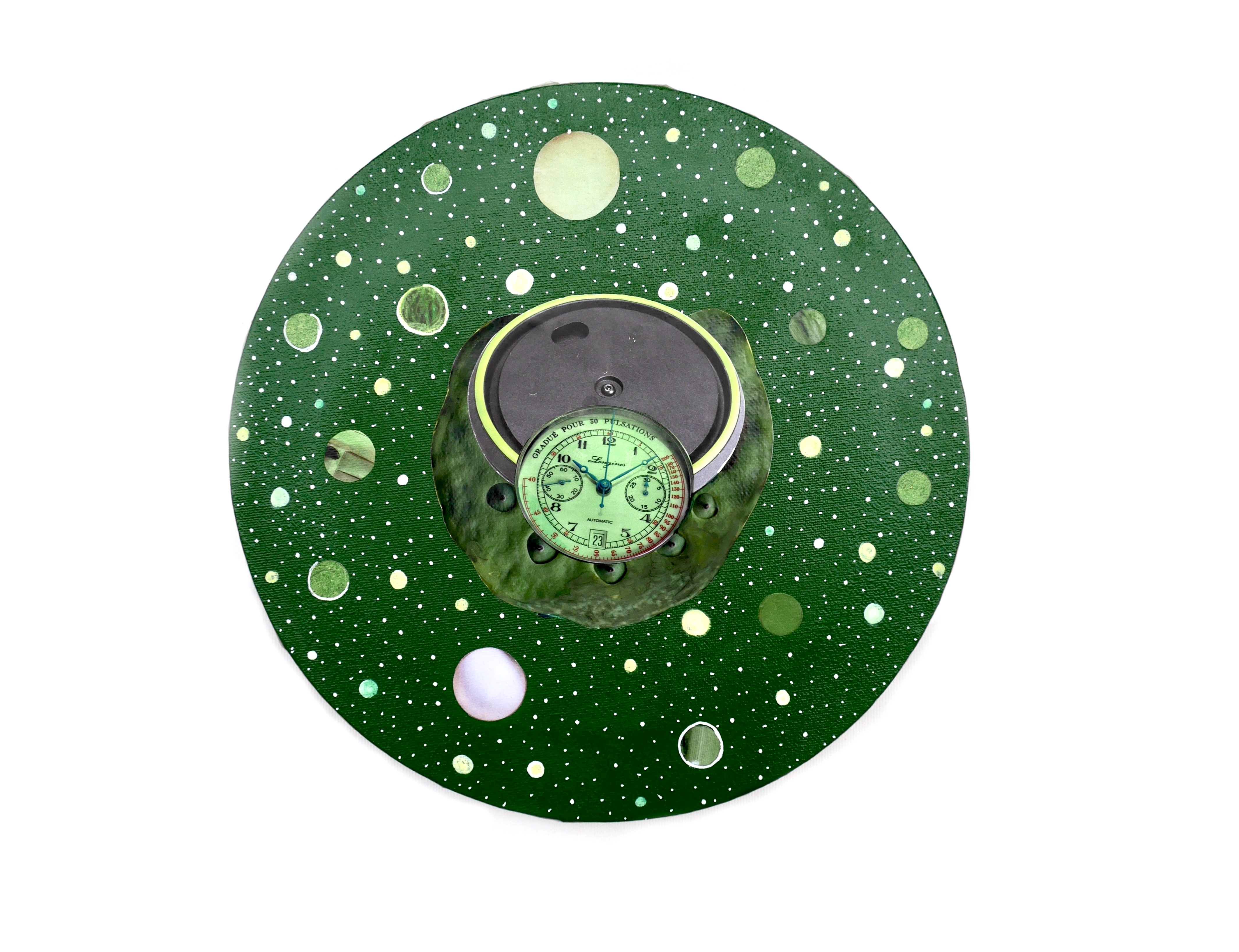
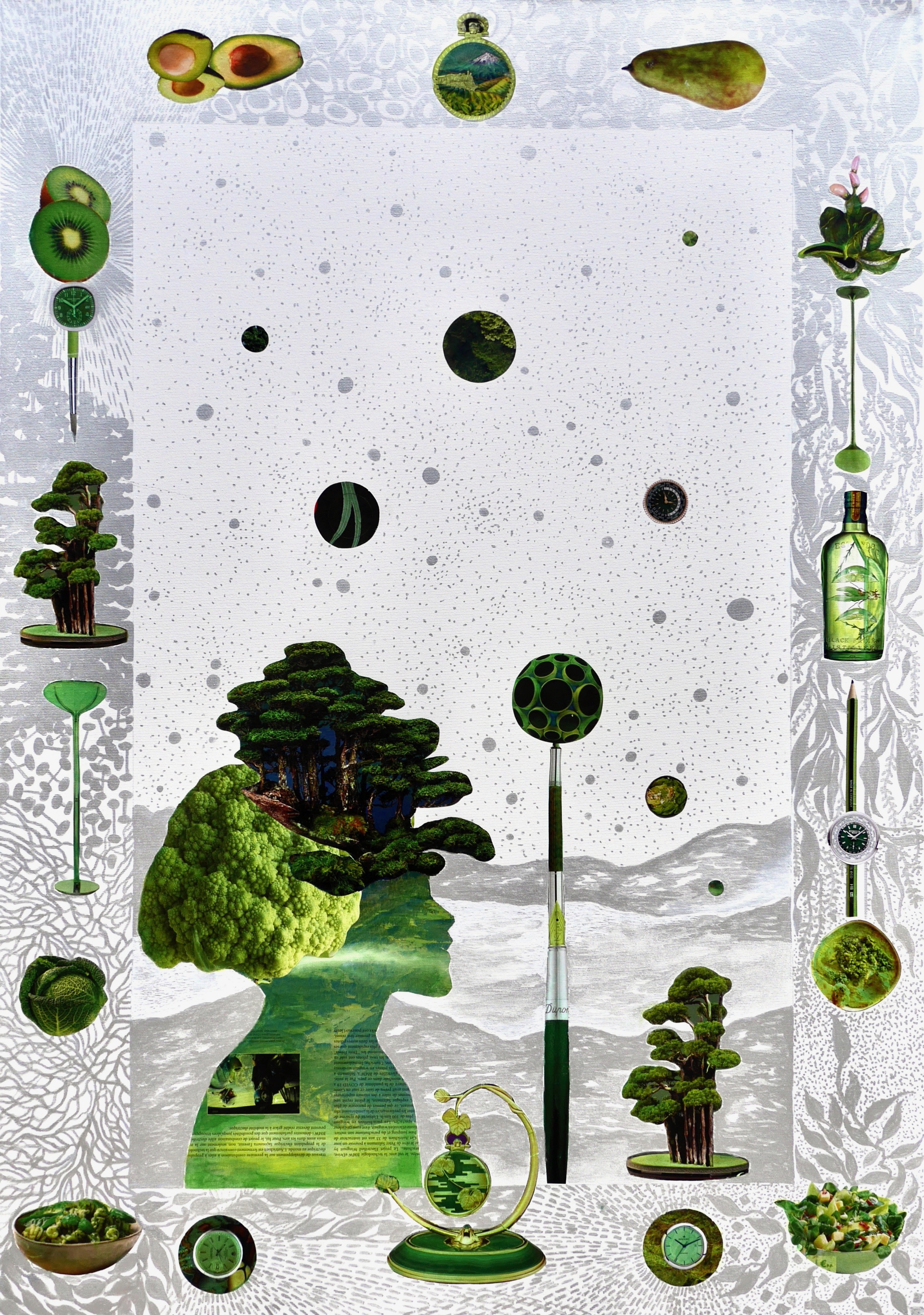
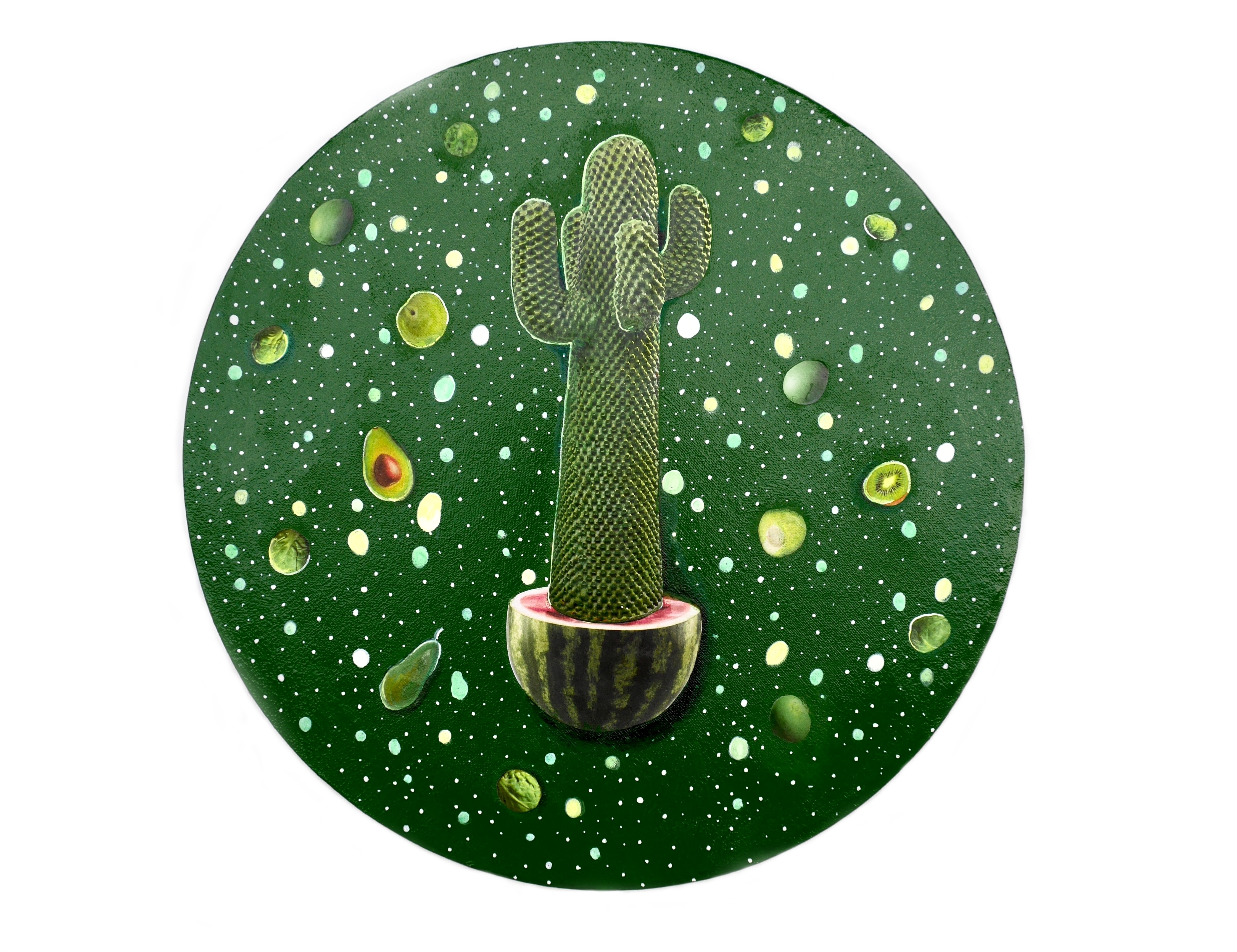
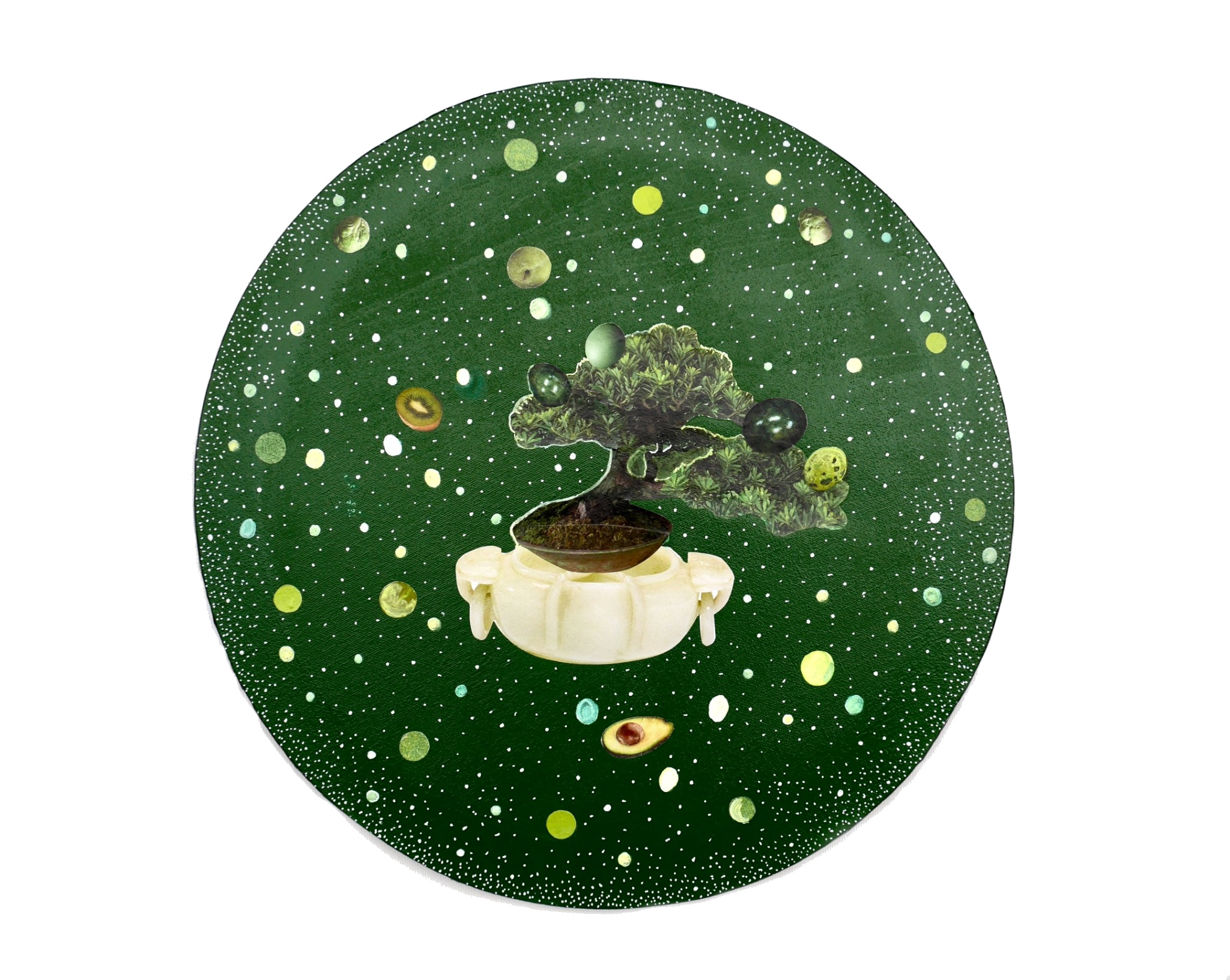
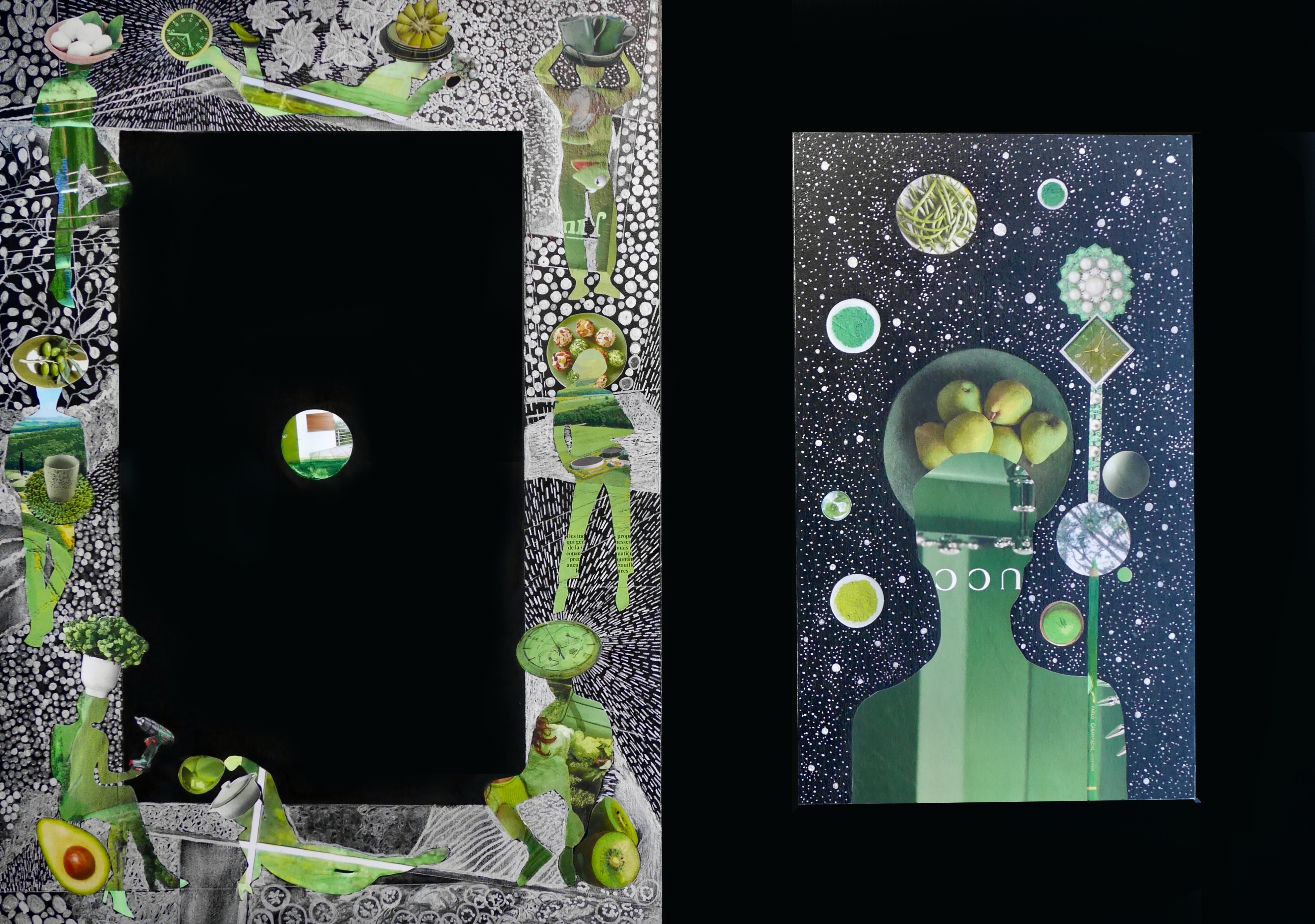
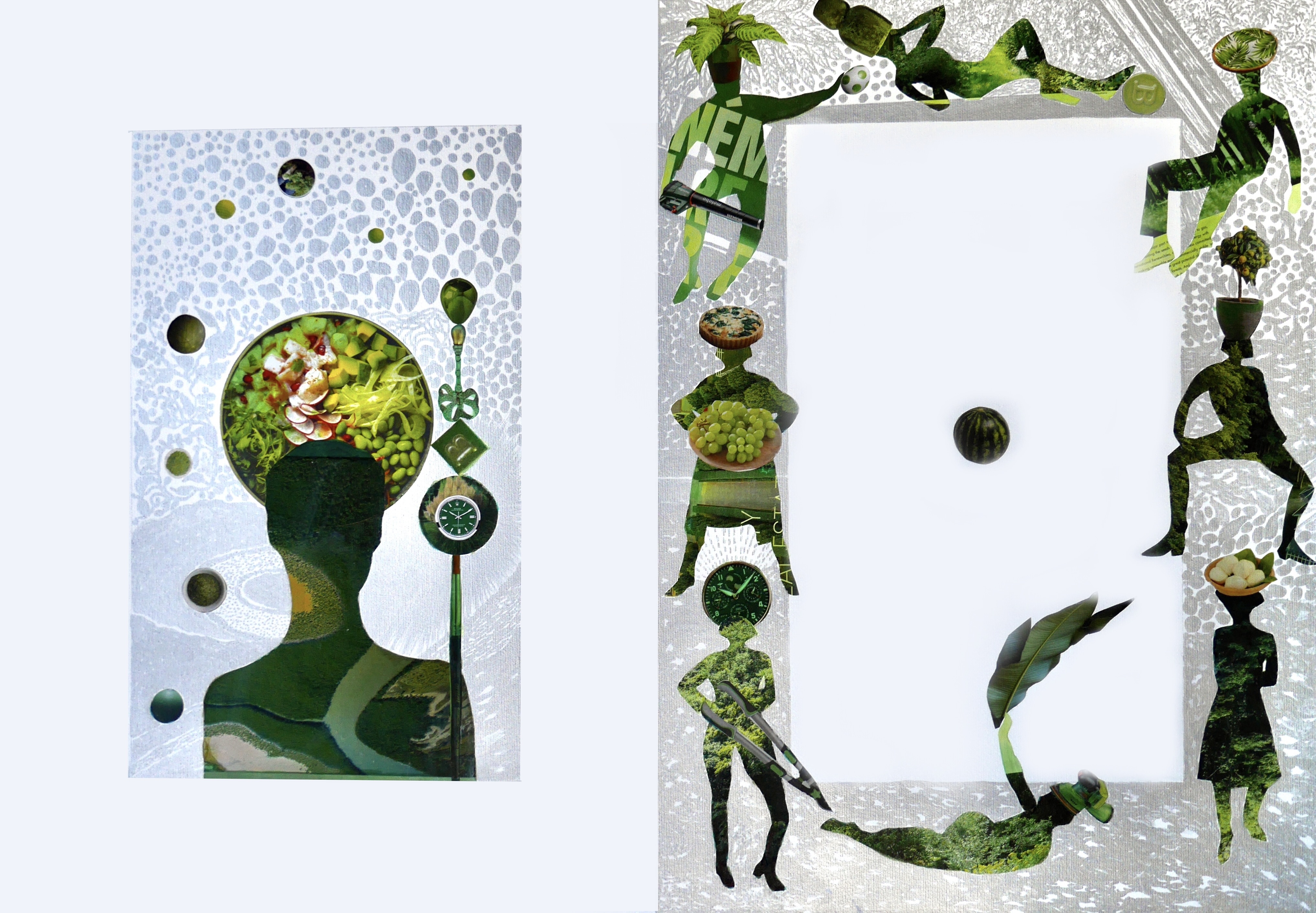
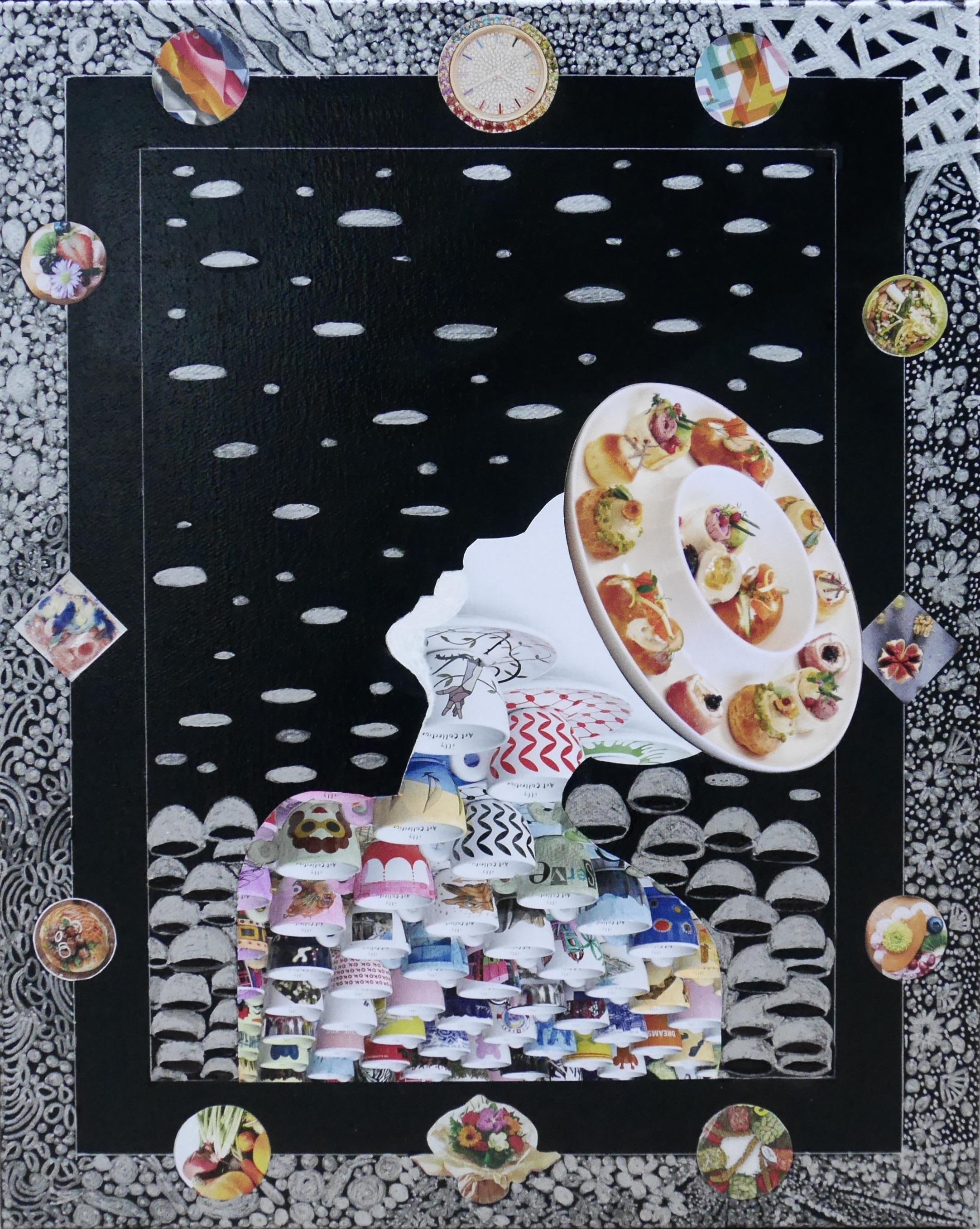
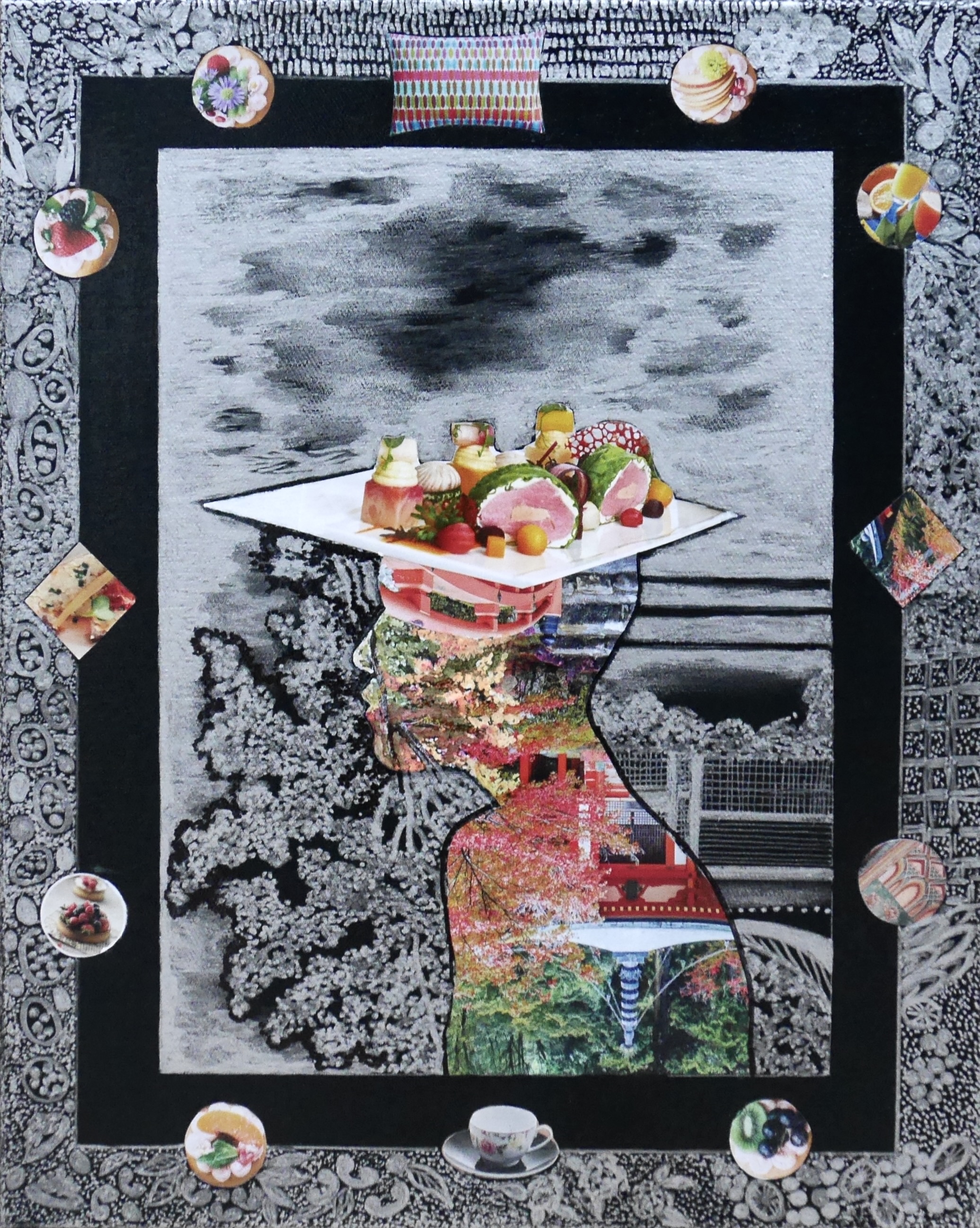
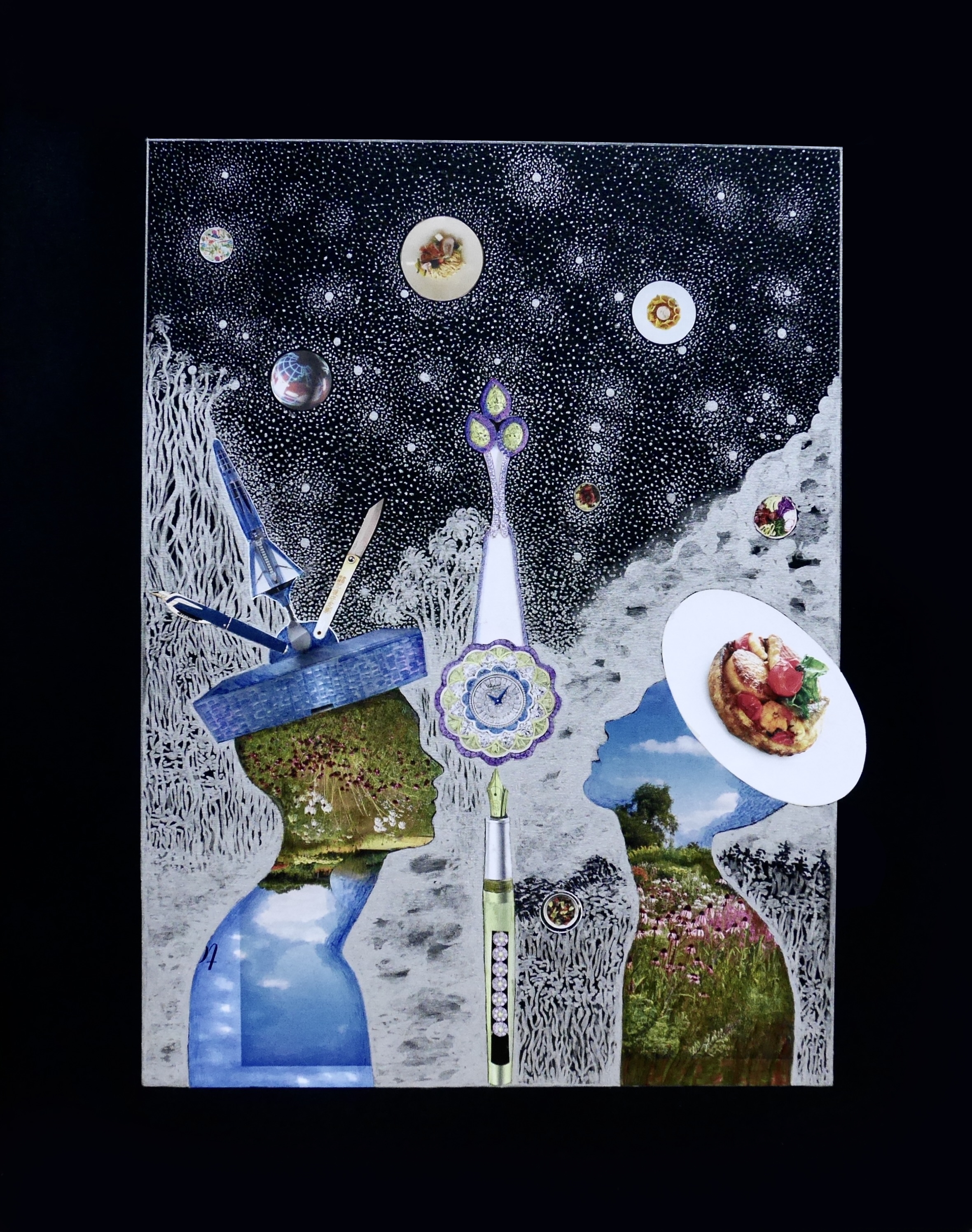
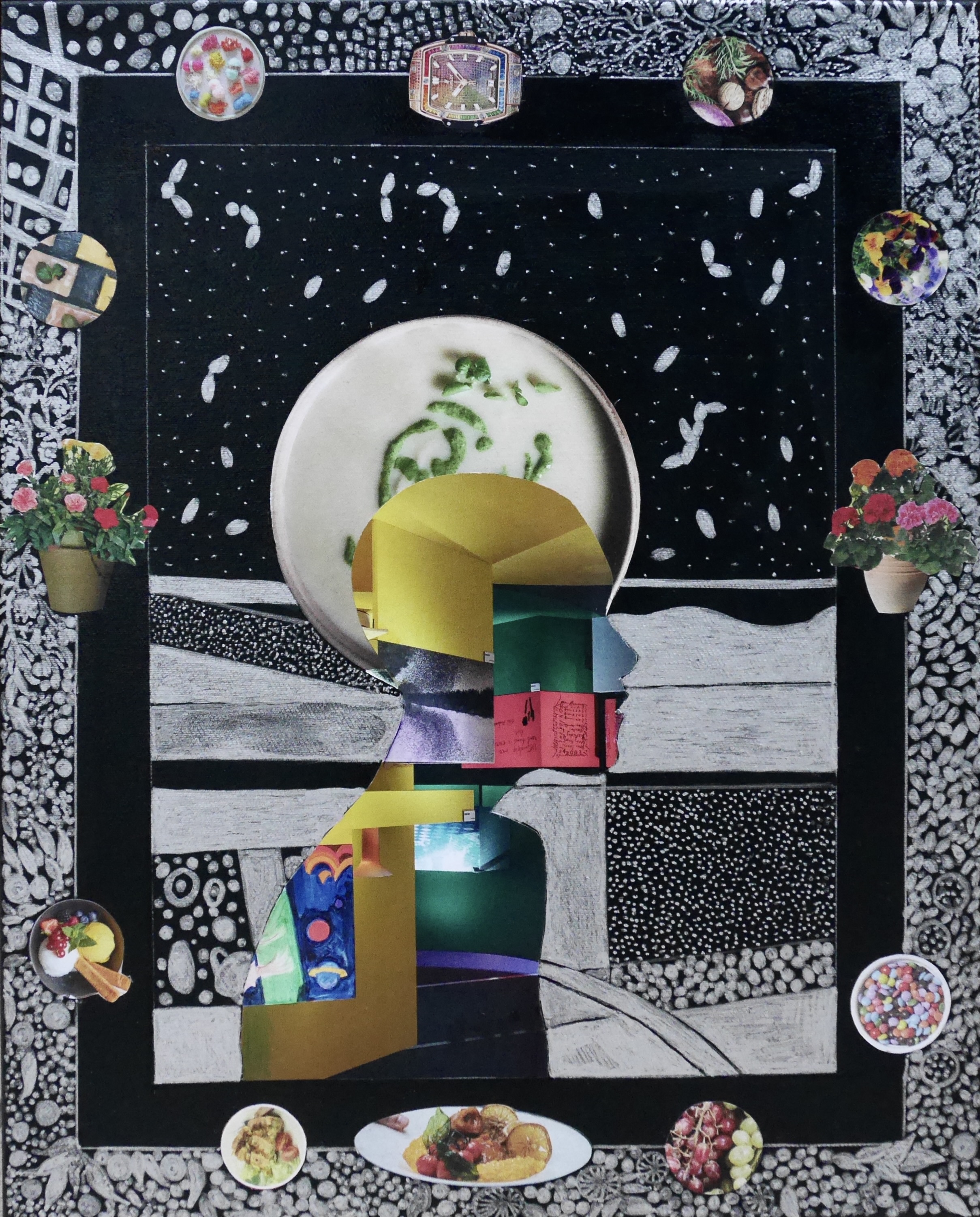
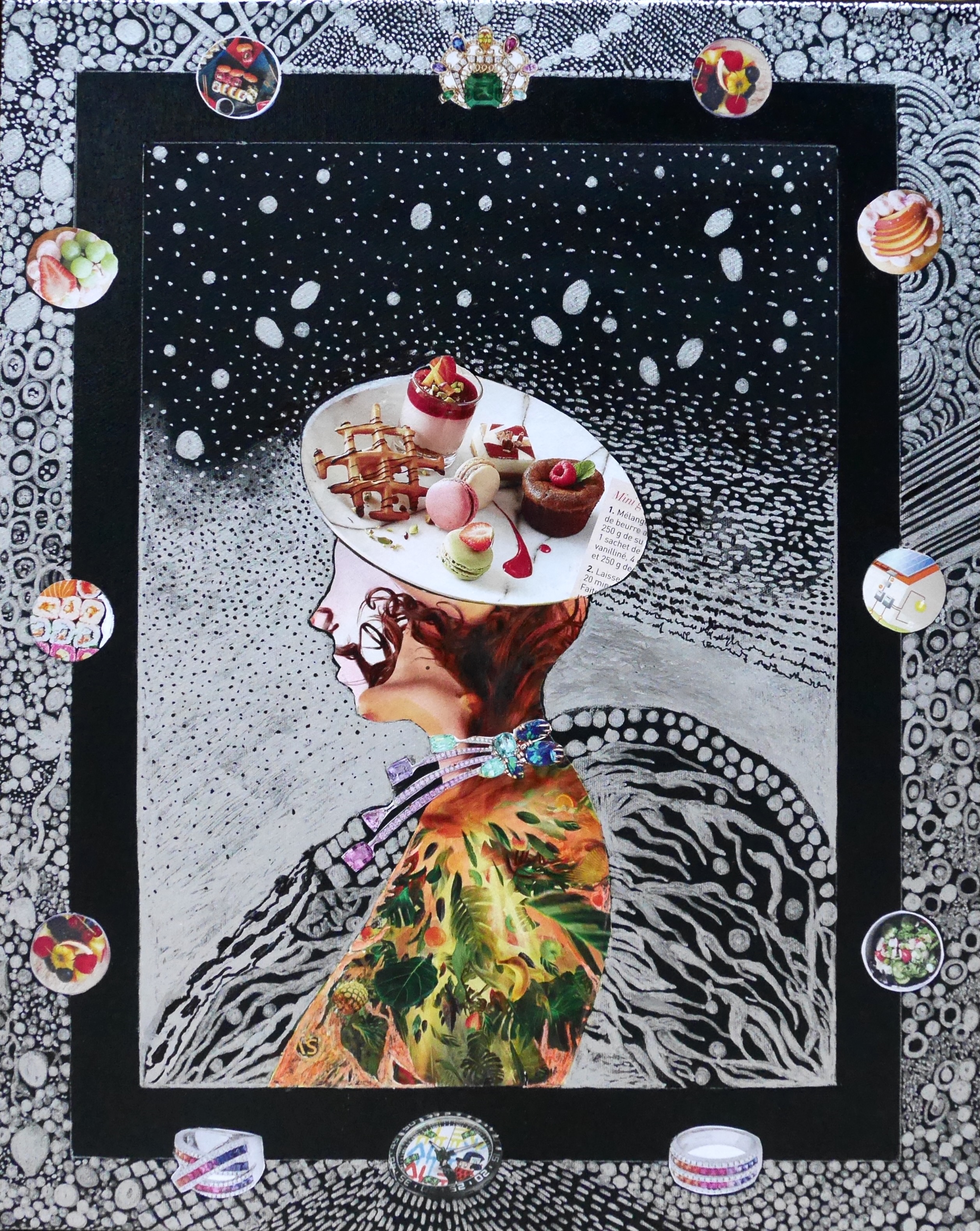
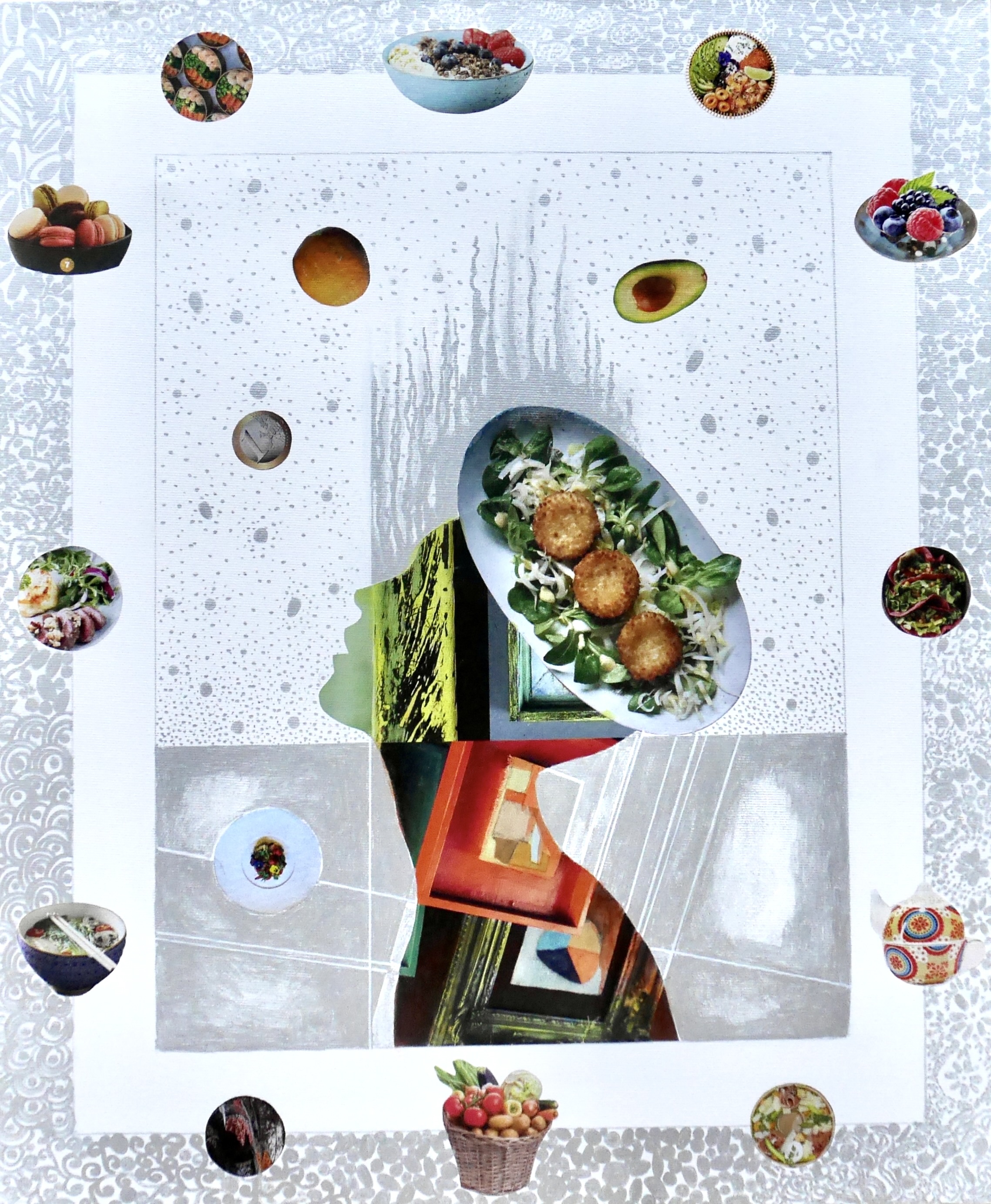
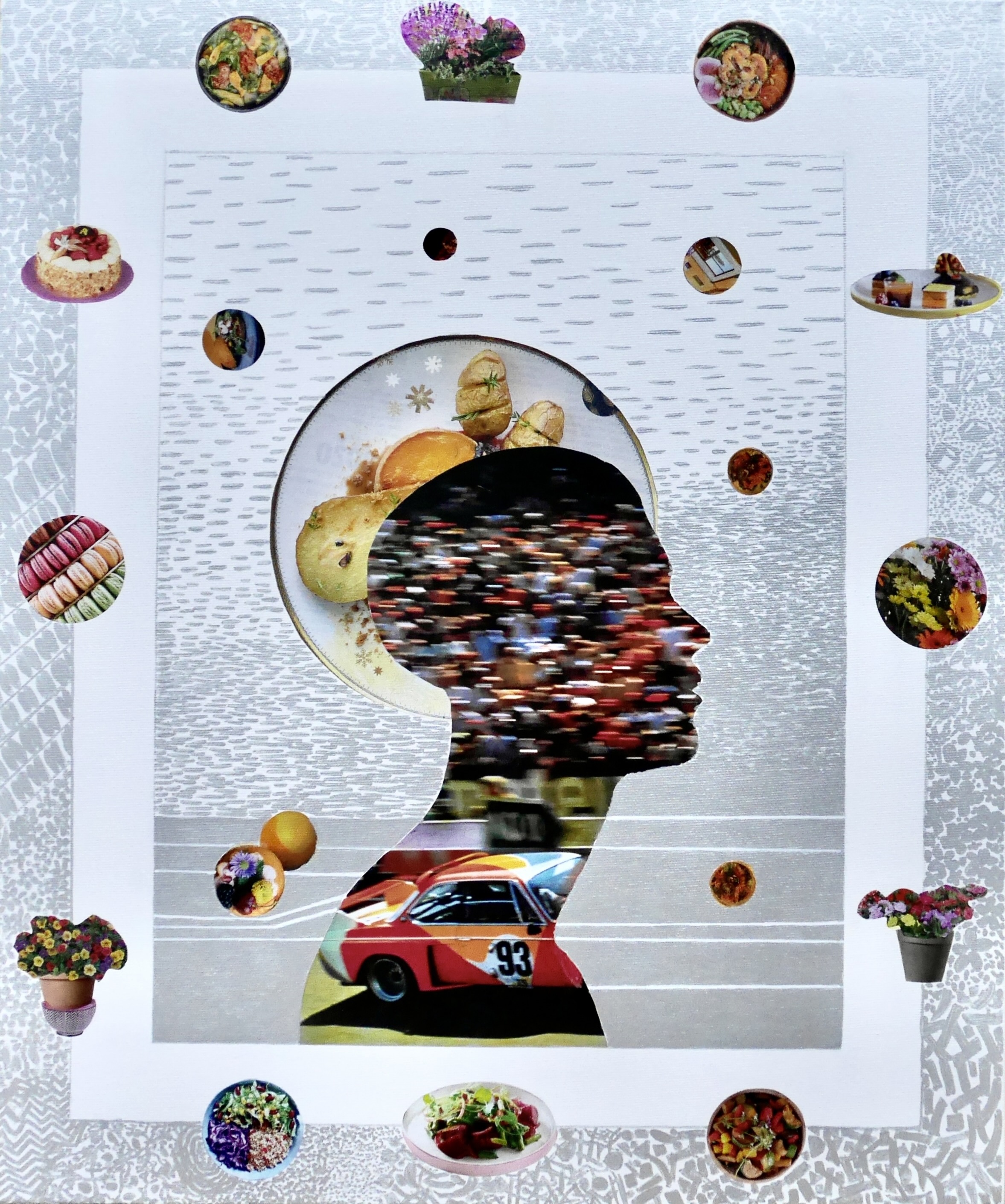
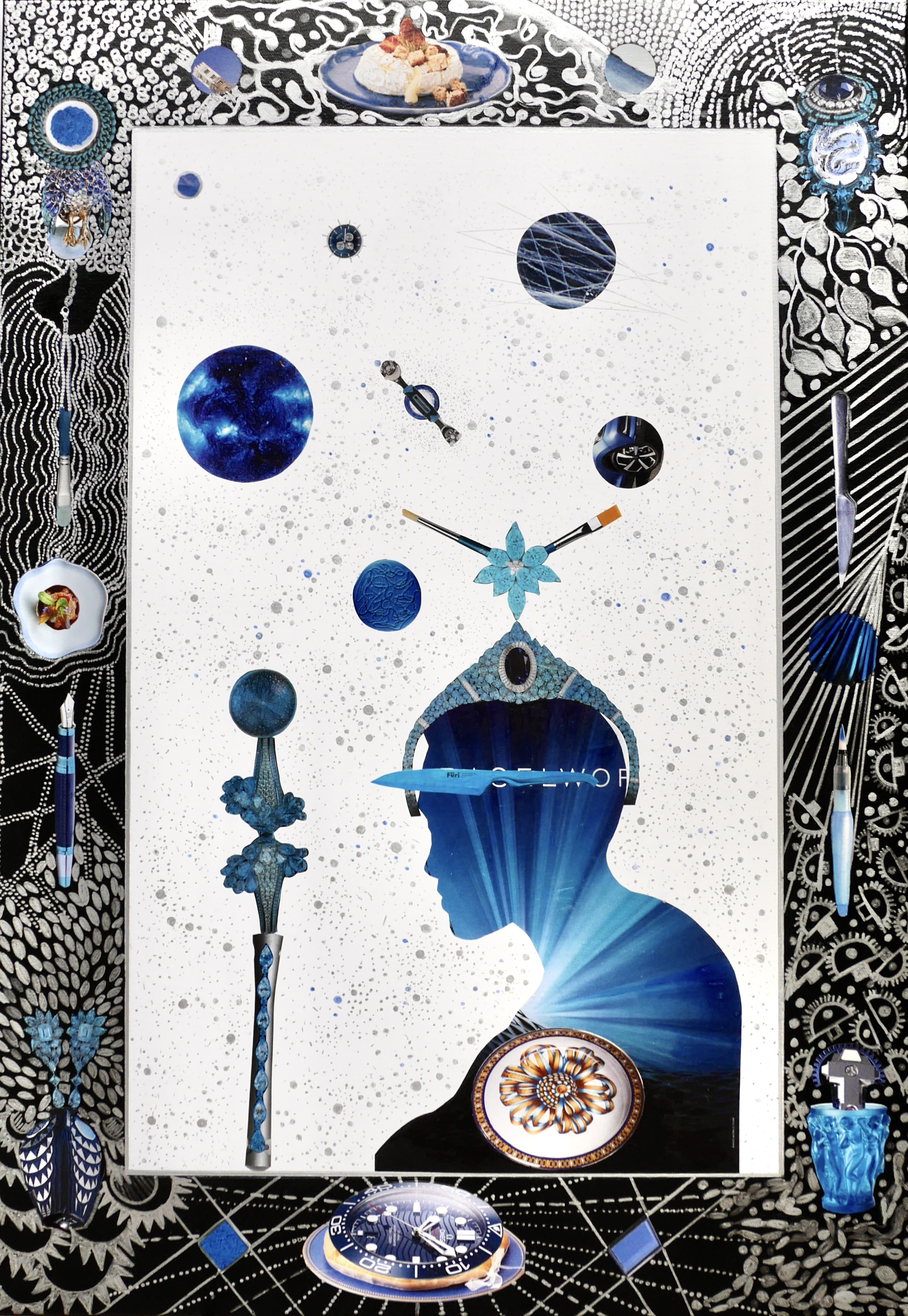
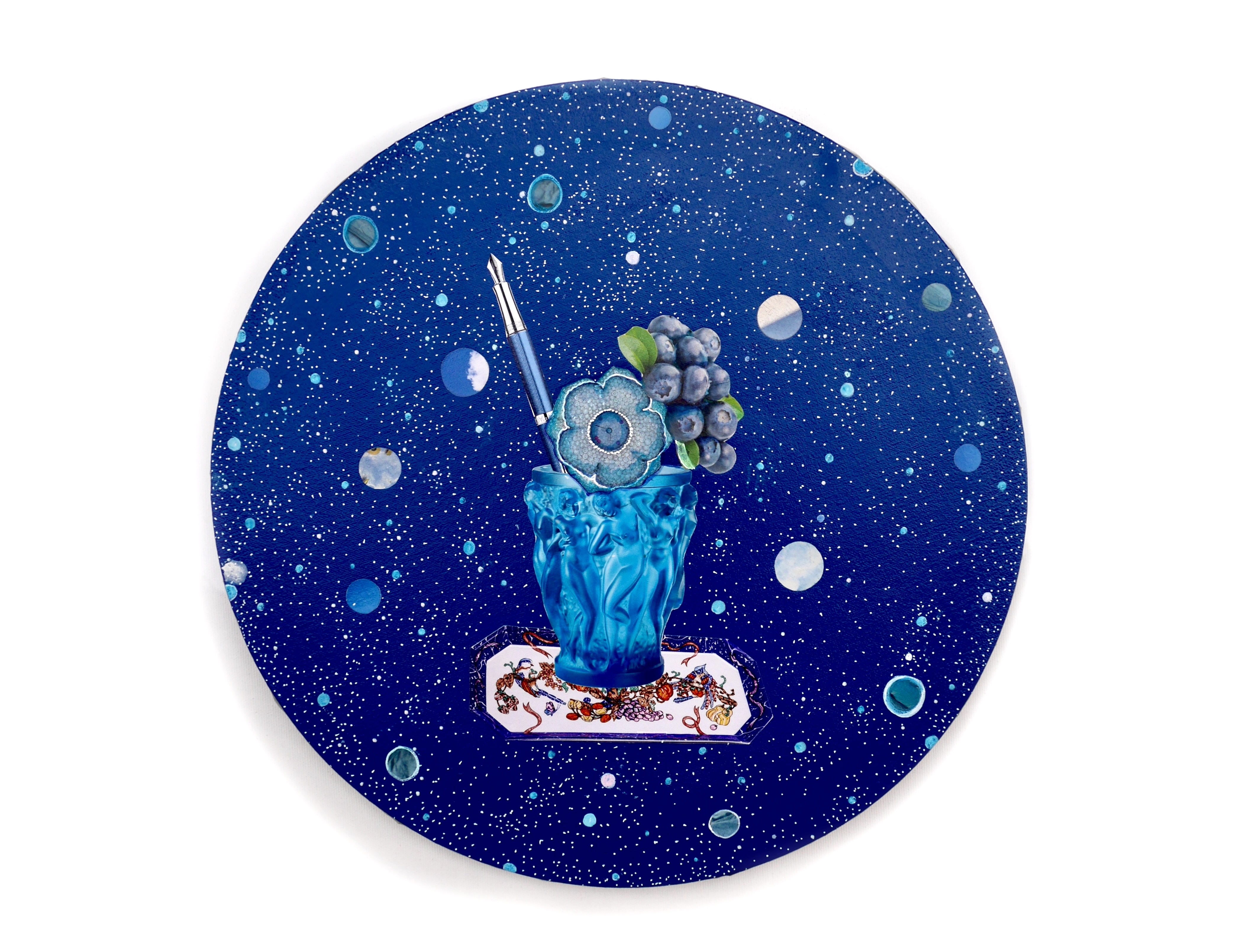
In 2024, Irina Gabiani developed Portraying the Universe, a project she worked on throughout the year. The project was presented in 2025 at Nosbaum Reding Gallery | Projects in Luxembourg. The exhibition continues her exploration of connection through a new relationship between the human figure and the Universe. Ideas developed in earlier periods return in a different visual language, bringing together portraiture, landscape, collage and painting. The interconnectedness explored through circles, patterns and changing structures now unfolds within the human profile, where the Universe becomes part of the portrait itself.
The project develops ideas explored in Human Landscapes, where landscapes appeared within and around human figures. Here, the profile becomes the central form, creating a space in which landscapes and the Universe are brought into relation. Drawing inspiration from profiles found in historical portraiture, including the visual language of the Cinquecento, Gabiani explores the relationship between the human figure and the wider Universe.
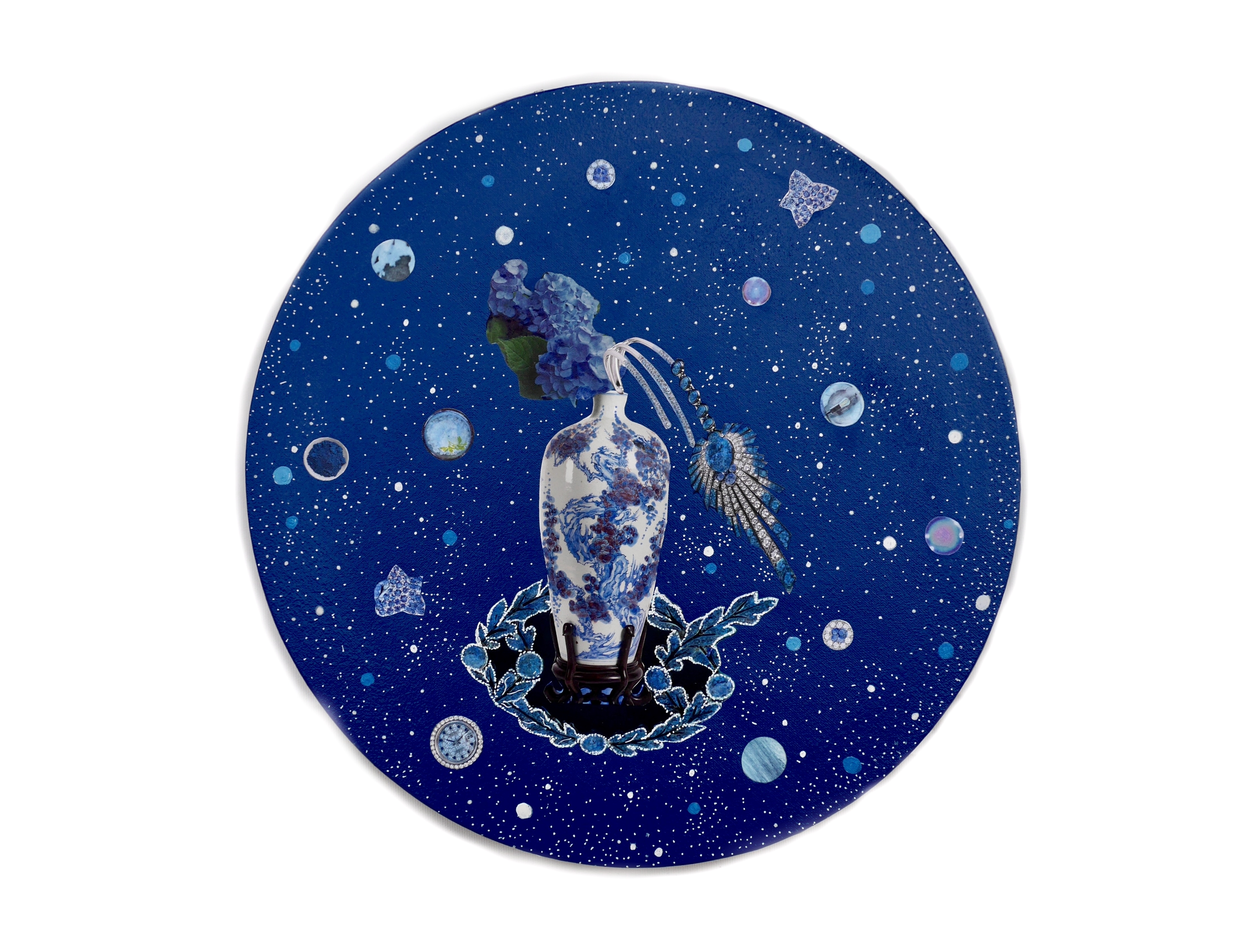
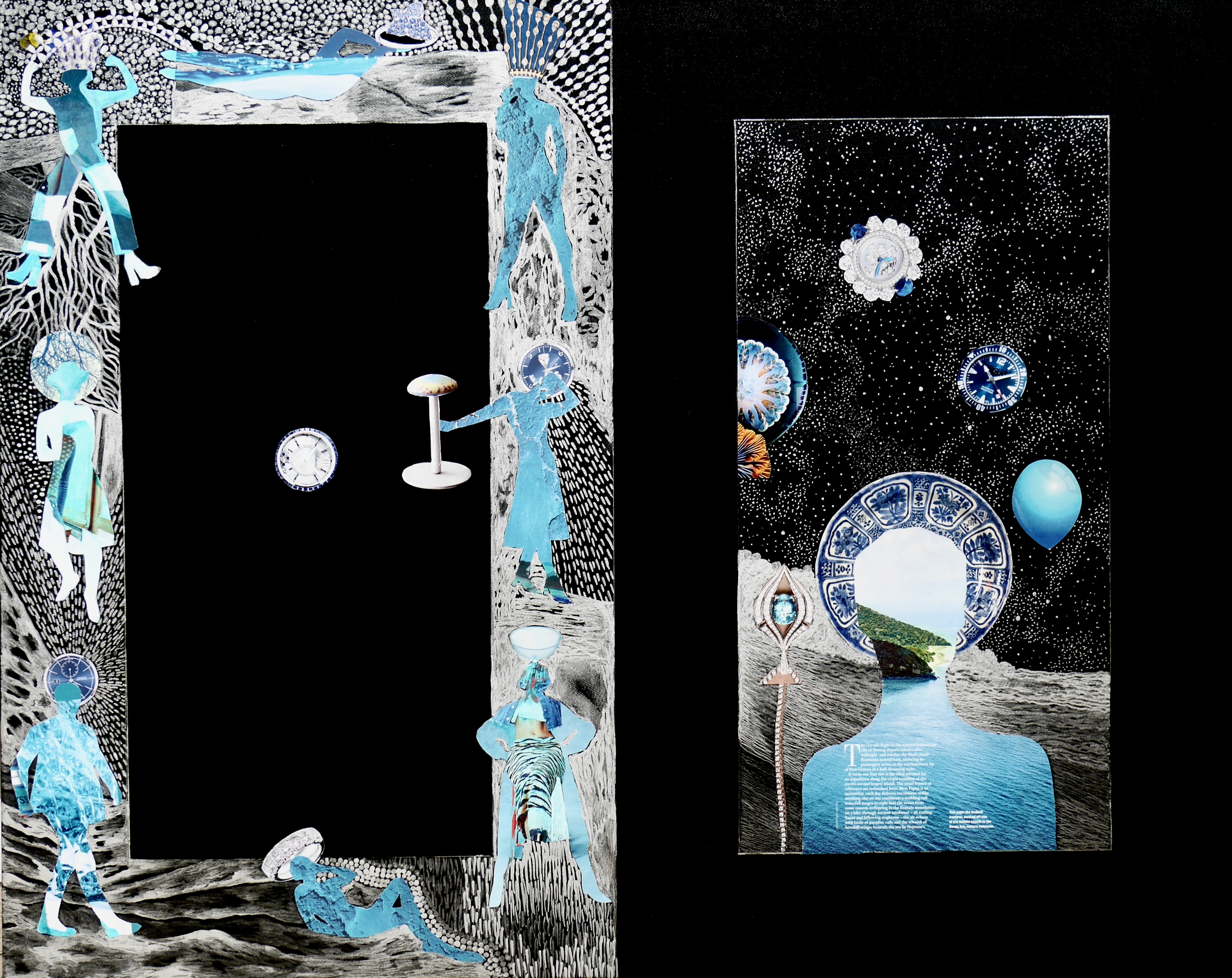
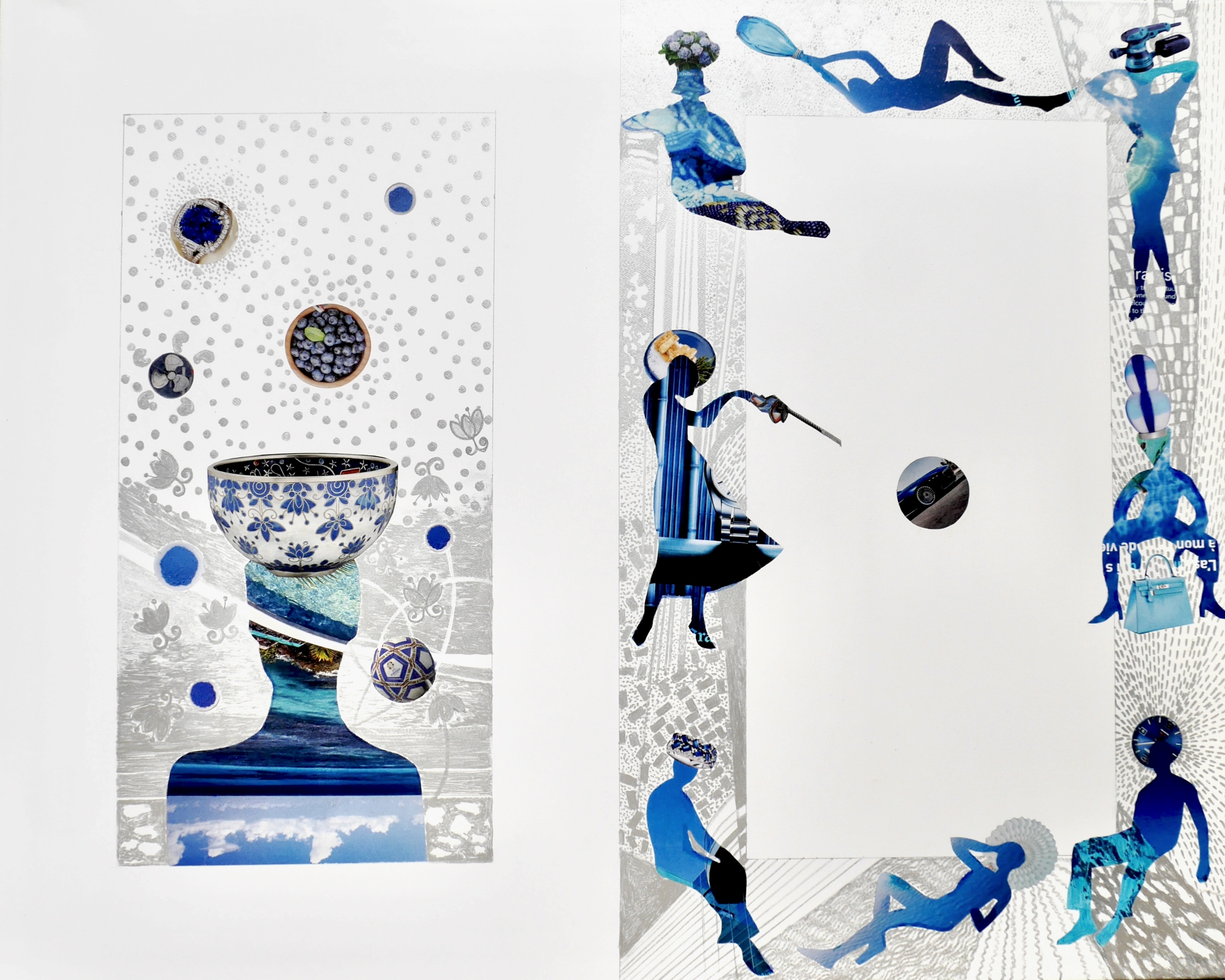
Within the human profiles, Gabiani incorporates photographic landscapes sourced from printed magazines, while the surrounding Universe is painted by hand. The painted background echoes the imagery within the portrait and follows the patterns found inside the figure, connecting the inner and outer spaces through recurring forms. Familiar shapes resembling halos or hats may emerge from ordinary objects, whose meanings develop through context and individual interpretation.
Collage is an integral part of Gabiani’s painting practice. Photographic fragments from printed magazines capture moments of contemporary life and bring different visual references into a new composition. Hand-painted interventions connect these fragments with the surrounding surfaces, allowing photography, painting and pattern to form a unified visual language.
In Portraying the Universe, Gabiani extends a visual principle also explored in her video works, where reflections appear within the contours of the human figure. In the paintings, this approach develops through collage, where images function as fragments that repeat, reflect and shift in relation to one another. One image can become a reflection of another, while the boundaries between the individual, the surrounding world and the Universe remain fluid.
In her videos, these relationships unfold through time. Within the collage, they are translated into space, where repetition, reflection and transformation become visual relationships within the composition, allowing the collage to function as a living image.
The Crawling Pattern extends across and beyond the contours of the portrait, connecting the landscape within the figure to the painted background. Moving between these spaces, it creates continuity across the composition. This relationship between inner and outer worlds also reflects Gabiani’s longstanding exploration of microcosm and macrocosm, present in her practice since the late 1990s.
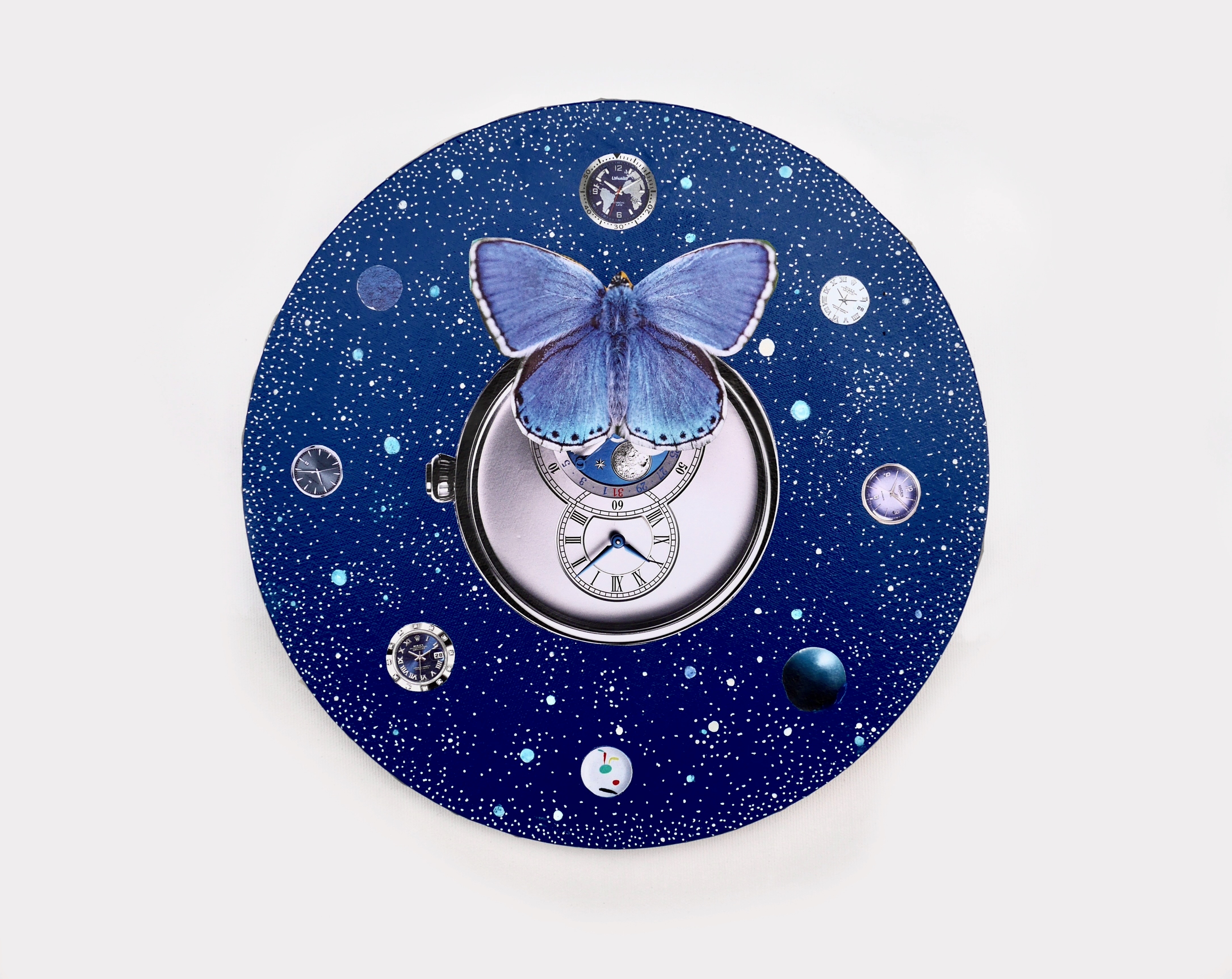
The frames throughout the exhibition continue the visual language developed in the previous project, Minimal-Complexity. Each work also incorporates a Flip Image, extending the exploration of image and emptiness, positive and negative, presence and absence. Two independently constructed spaces are brought into relation: one containing the portrait, the other creating an empty space connected through a small circular element. This develops the earlier exploration of framed emptiness into a new relationship between image and space.
In Portraying the Universe, these interconnected ideas converge within a composition where the human figure, landscape, pattern and emptiness continually relate to one another. Earlier investigations acquire new forms, revealing how Gabiani’s artistic practice evolves through the return and transformation of ideas, and how the relationship between the human being and the Universe can be explored through different visual languages.