Paintings
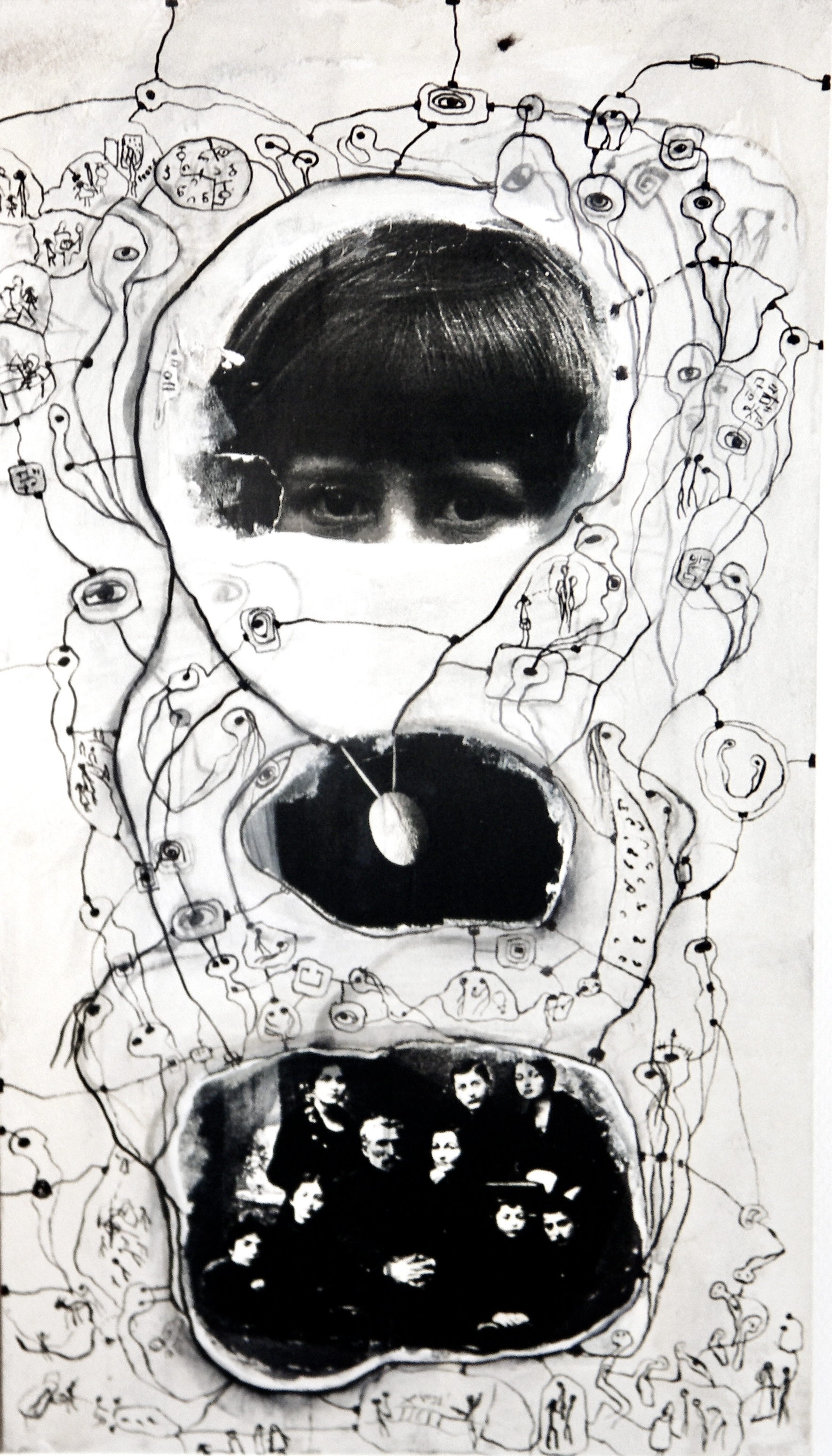
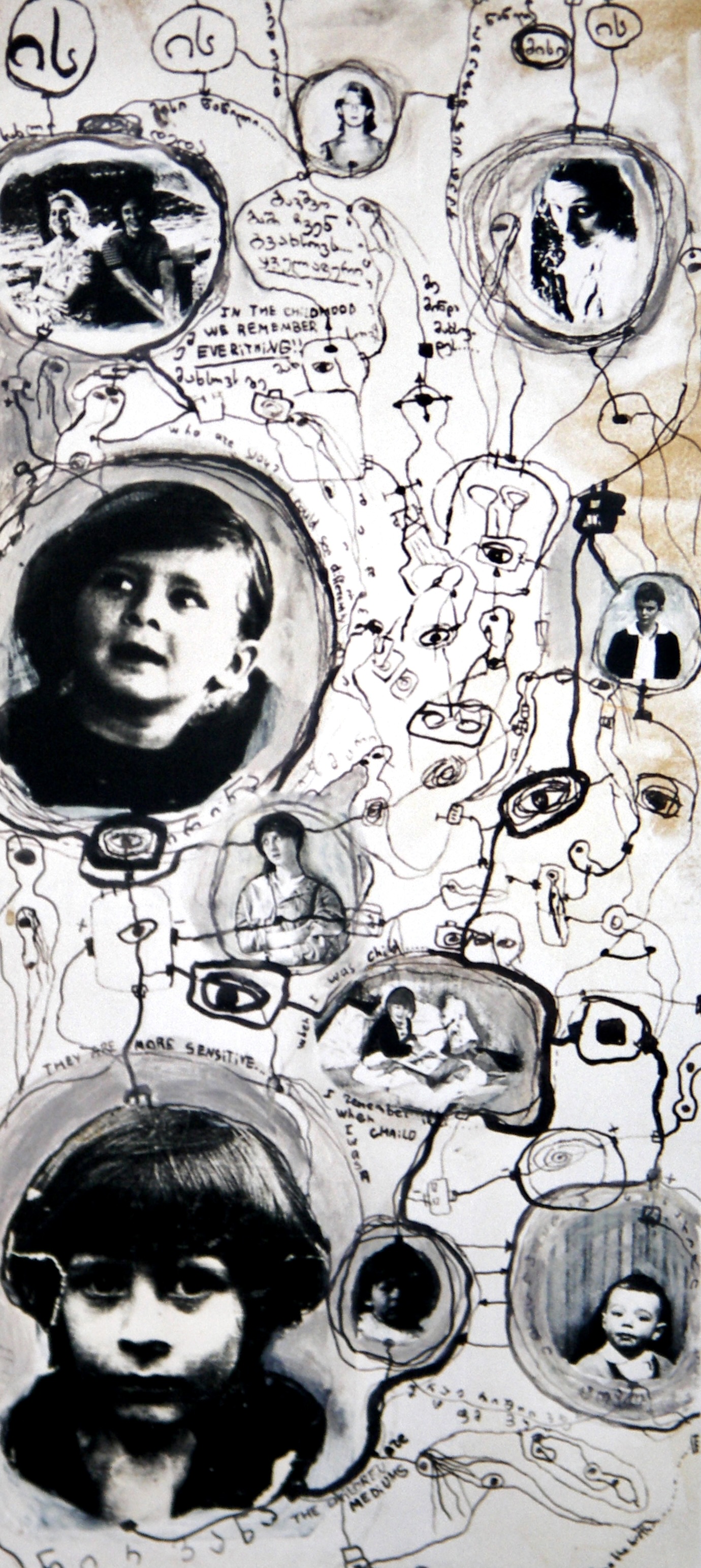
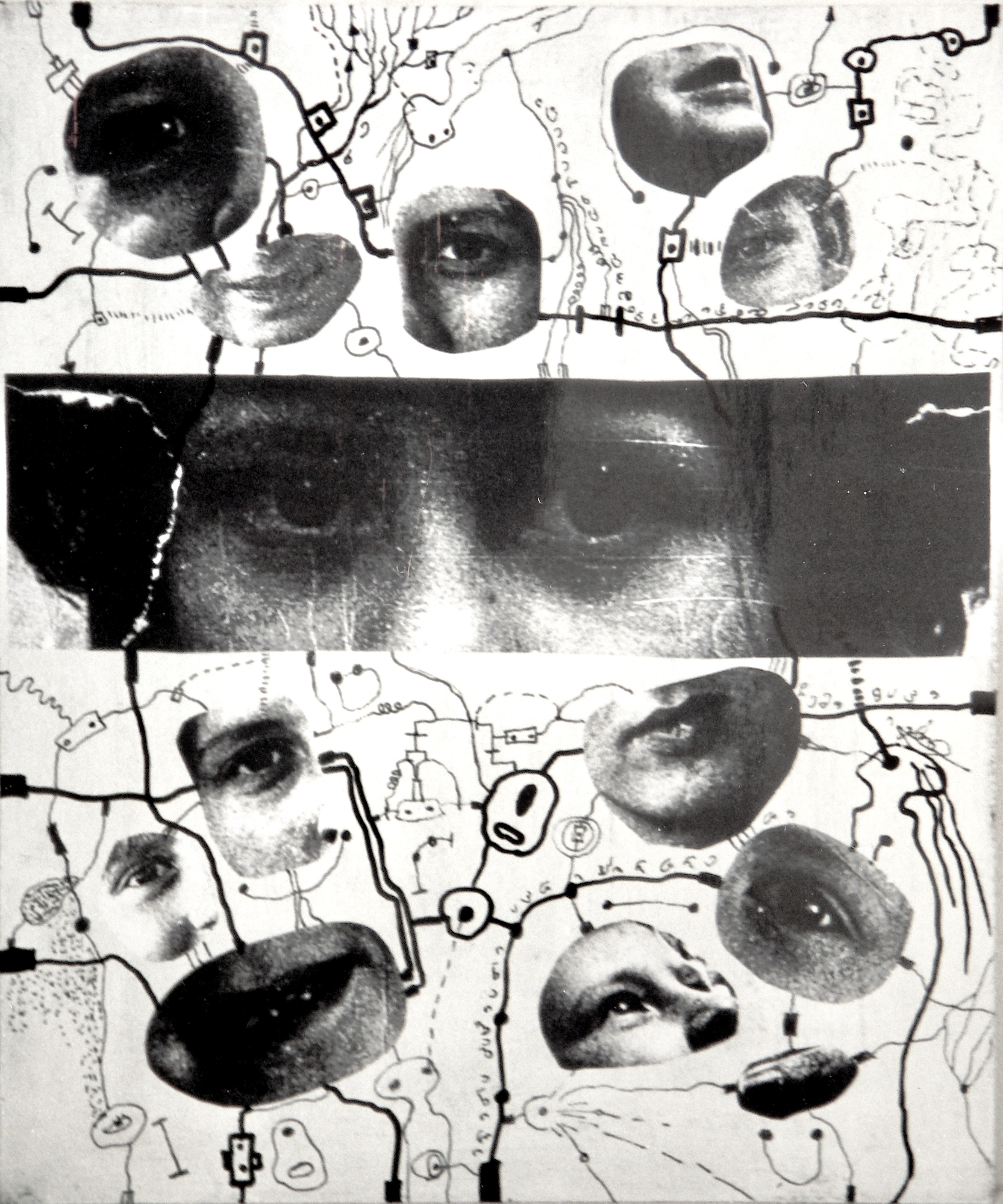
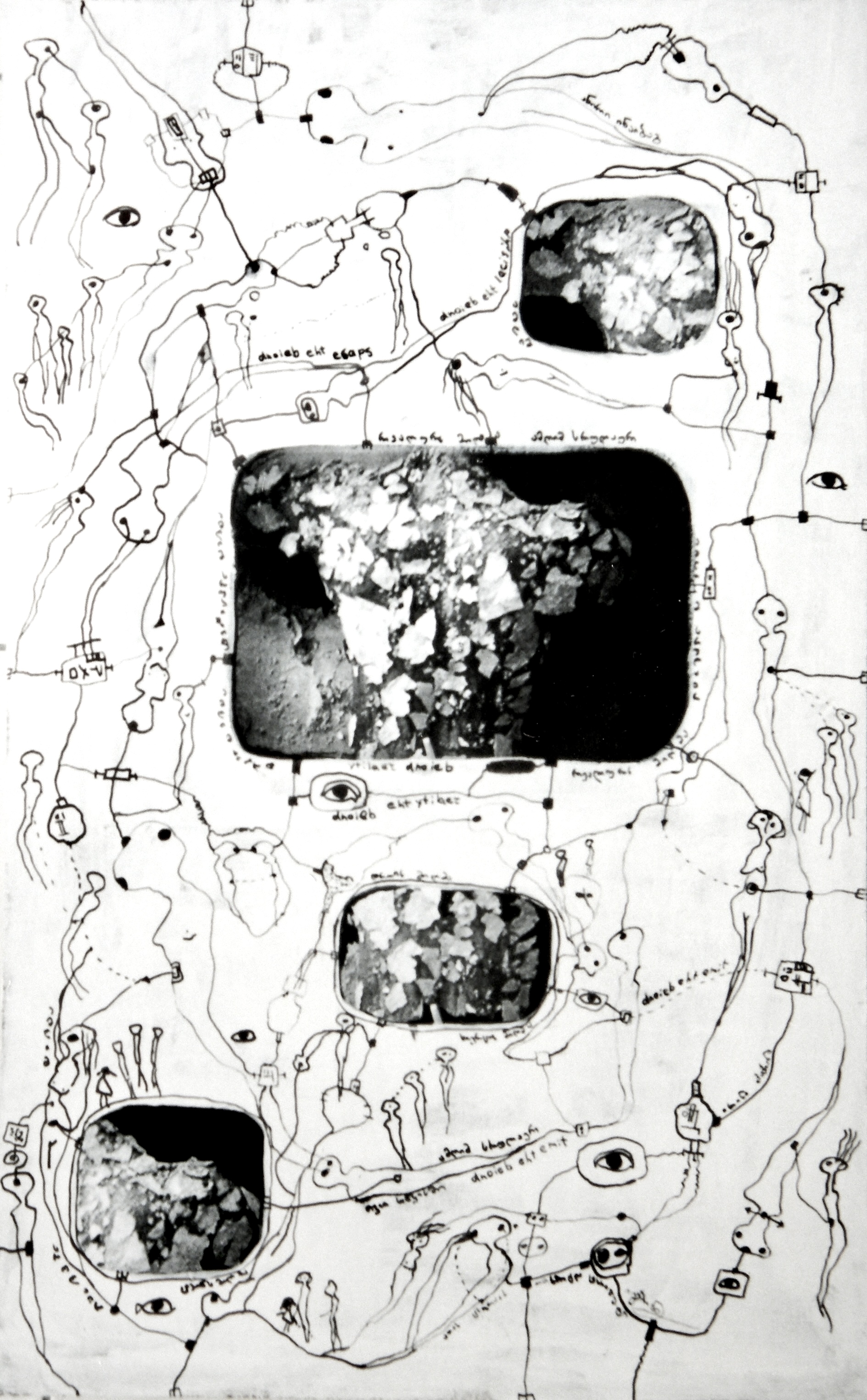
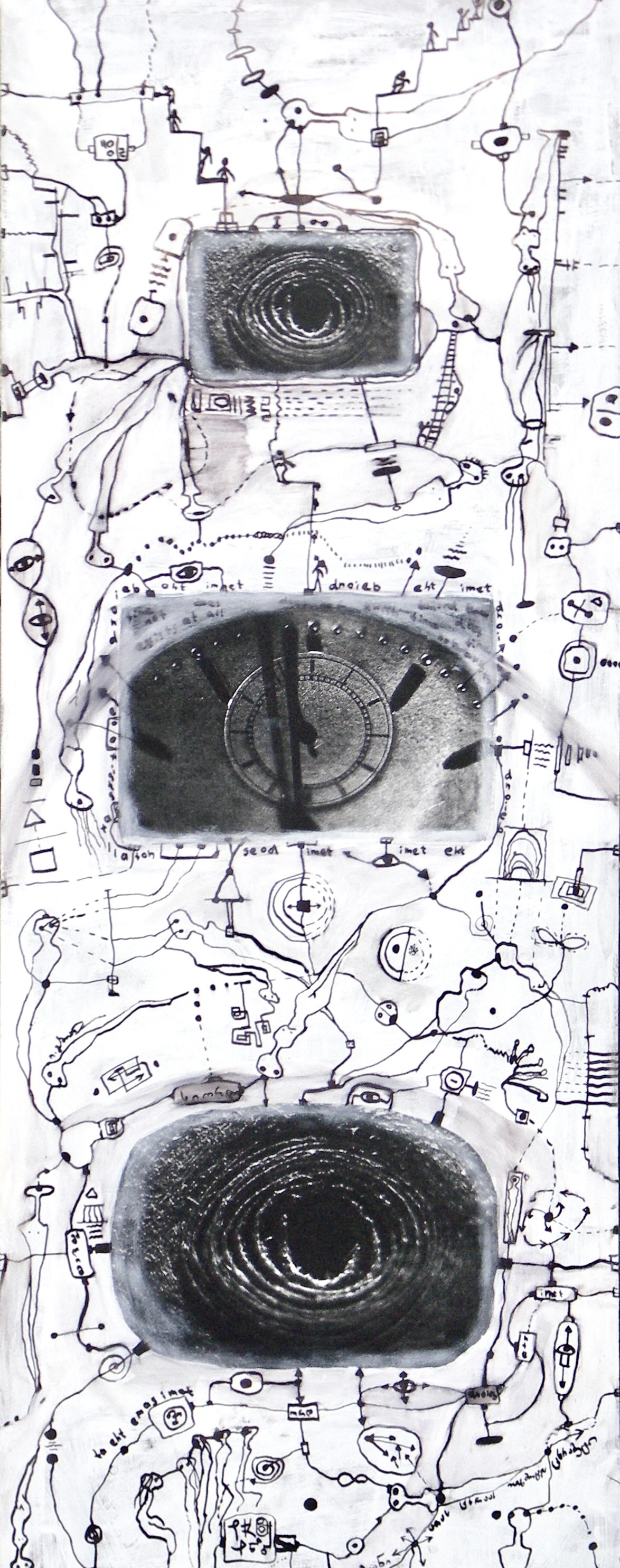
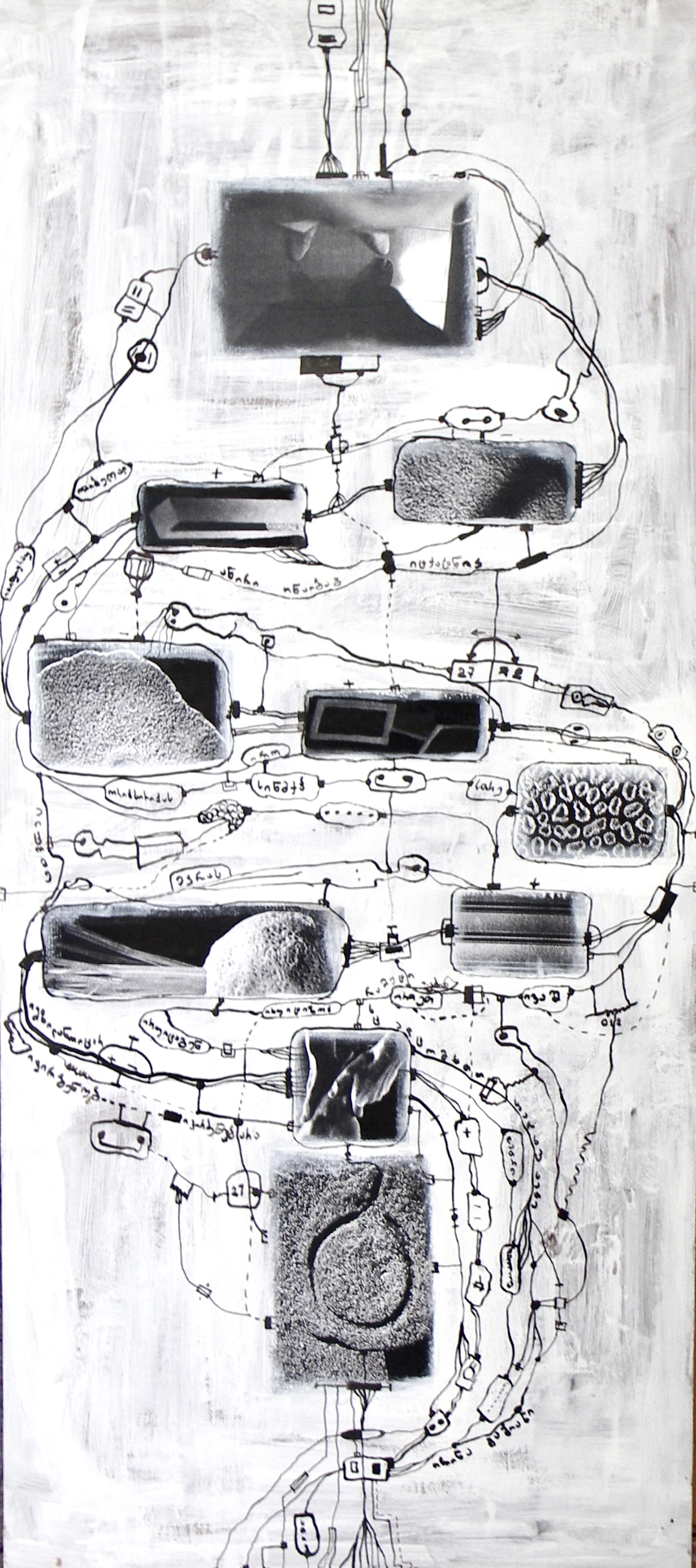
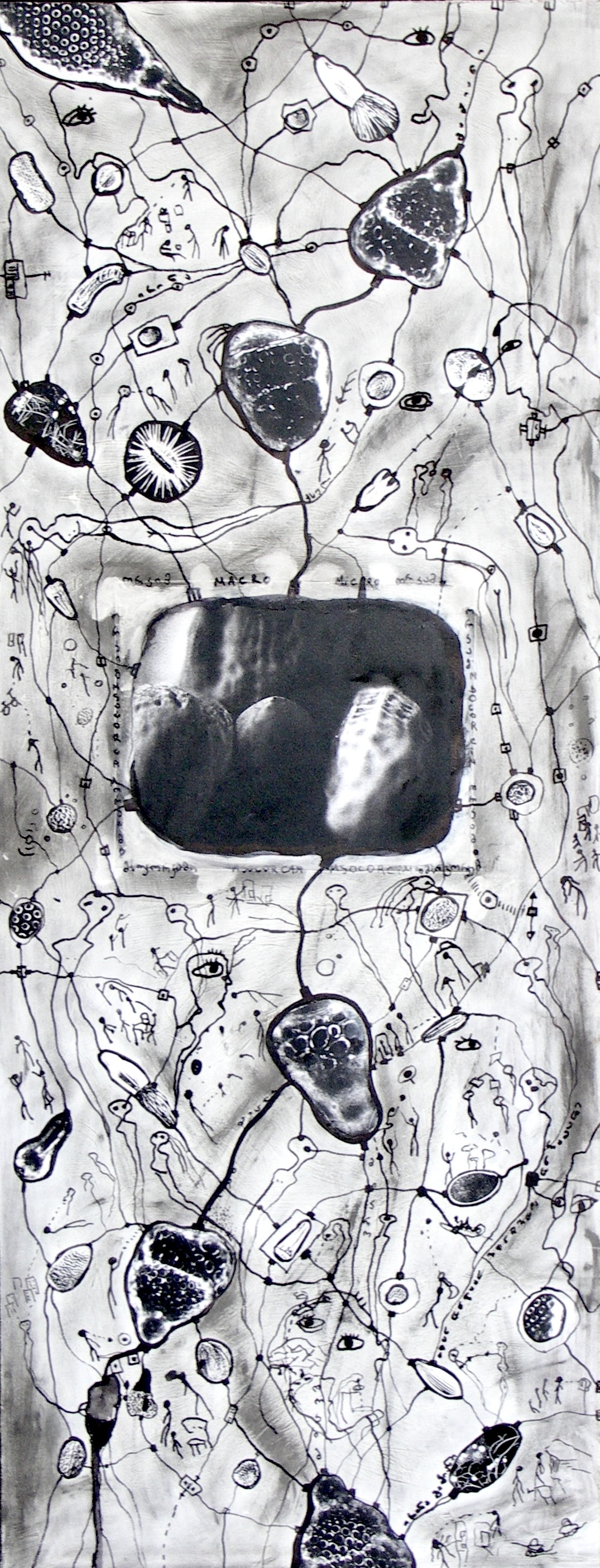
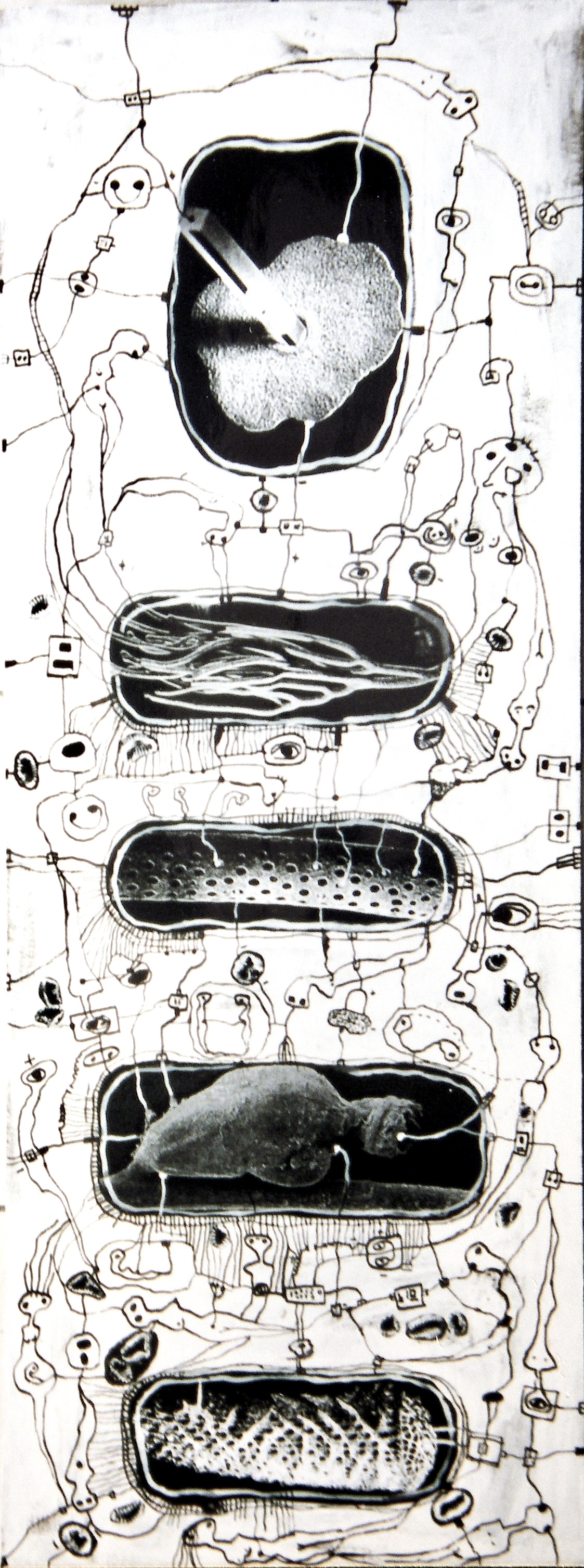
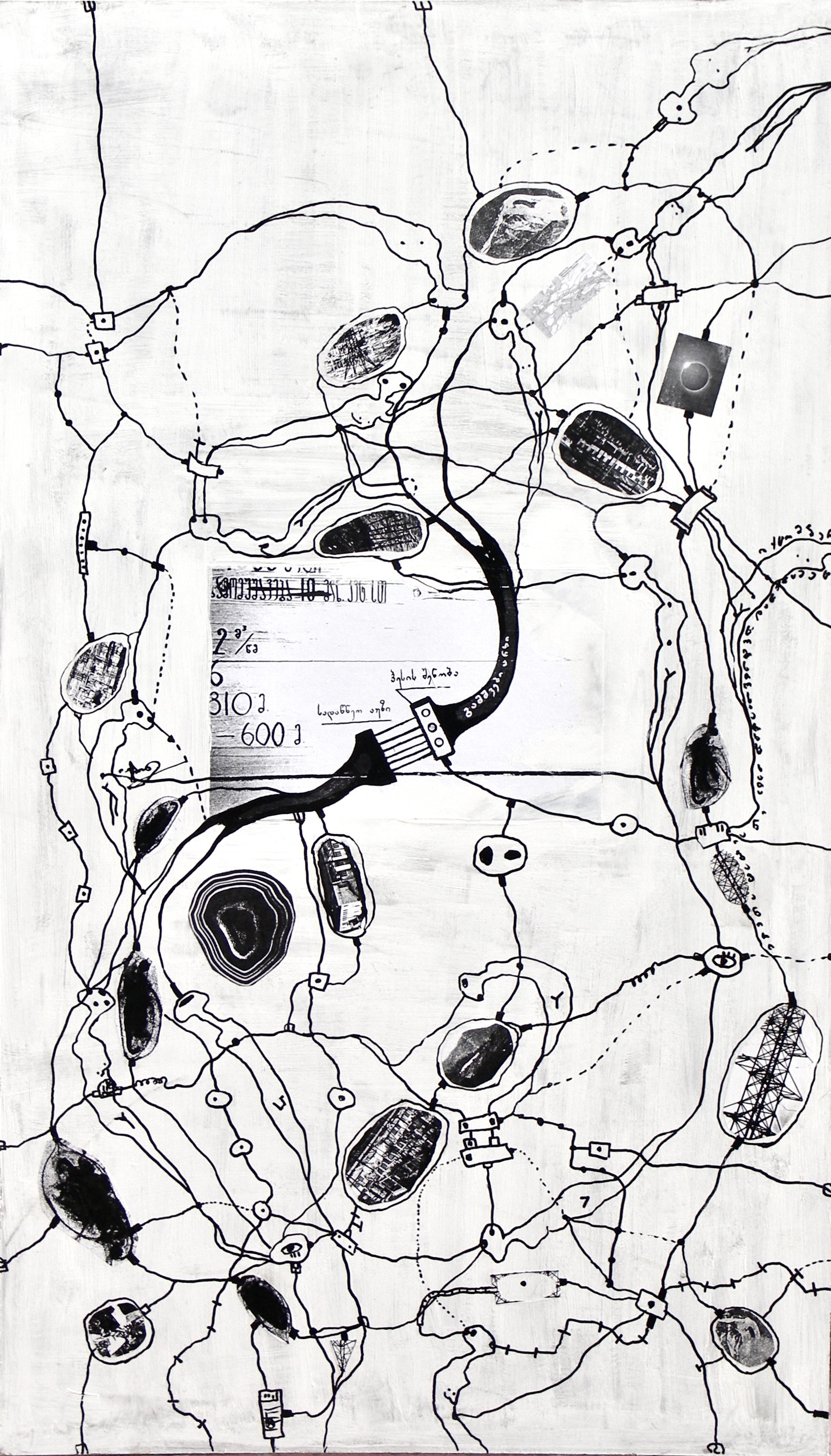
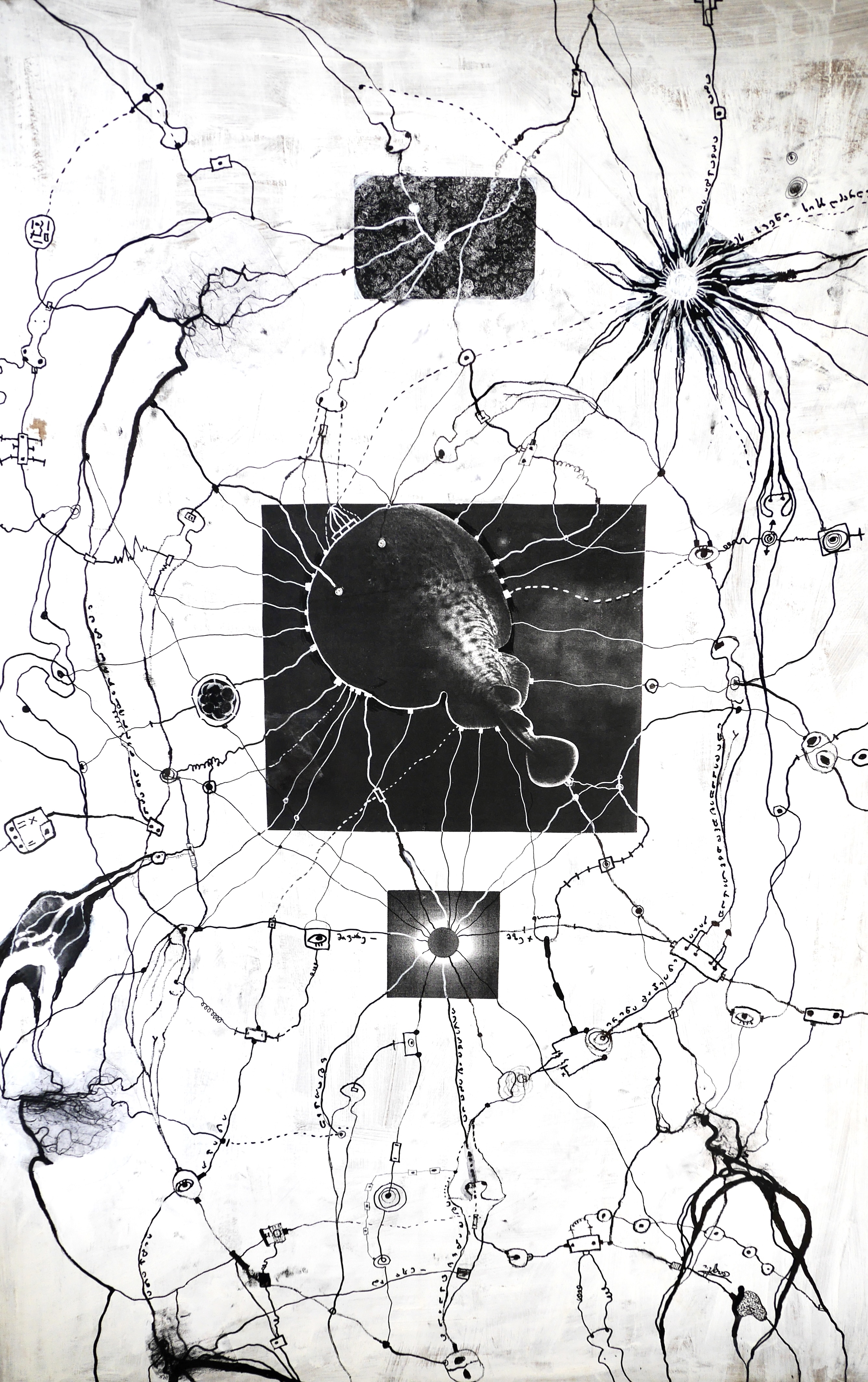
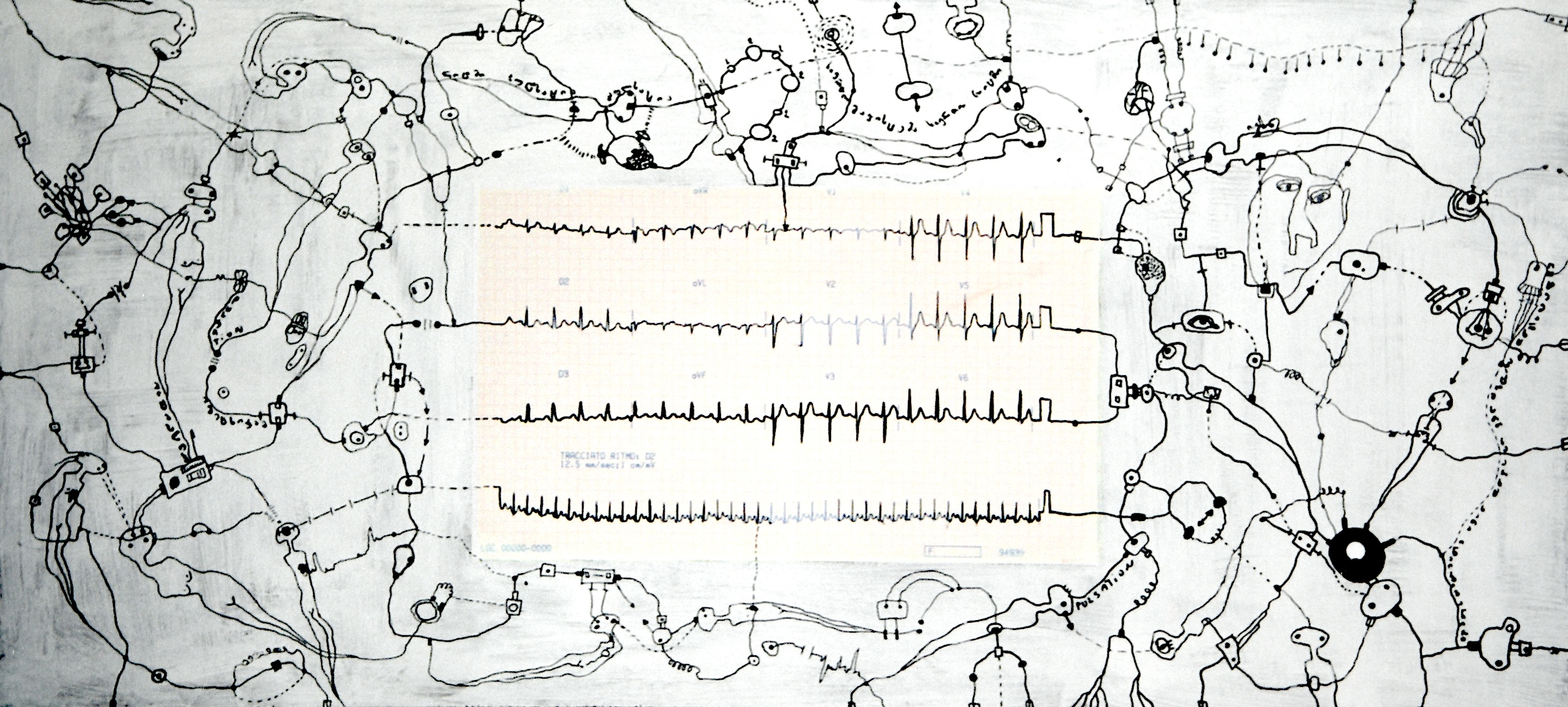
Between 1998 and 2000, Irina Gabiani developed a visual language in which personal memory, the body, technology, energy and the cosmos become part of an interconnected system. The period continues the earlier personal investigation, but expands towards broader questions of connection, perception and the relationship between different forms of existence.
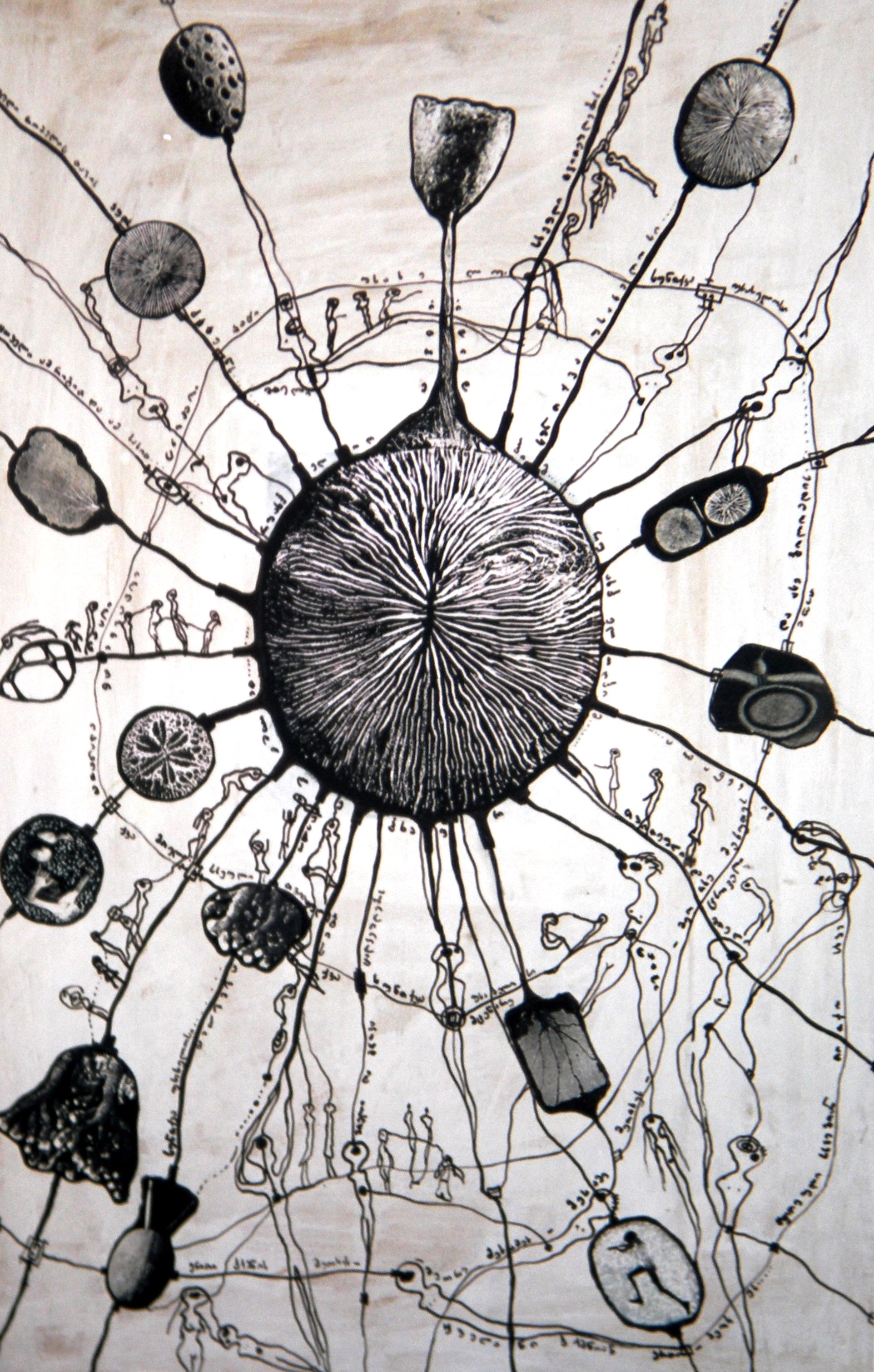
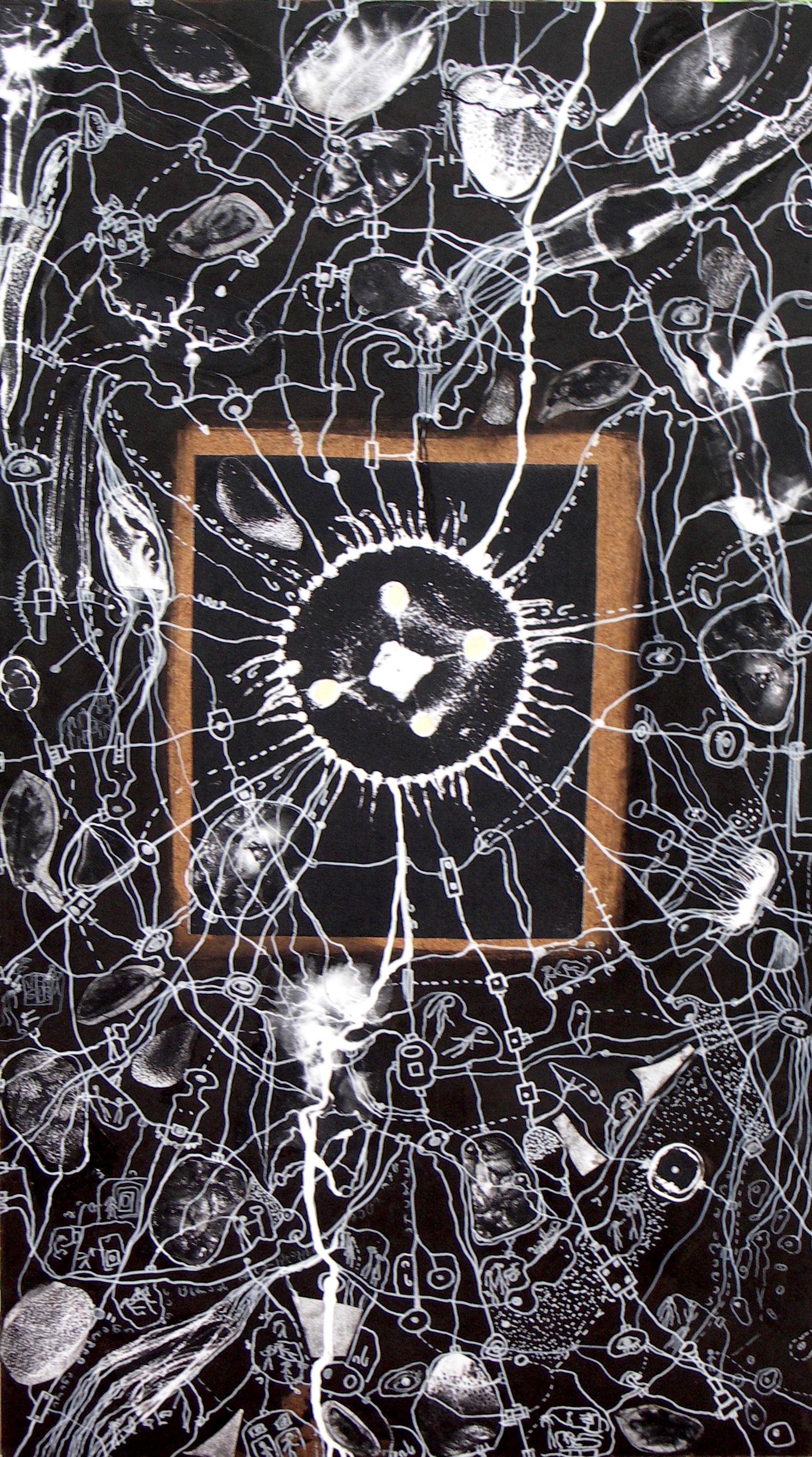
The works draw on family photographs, childhood images and fragments of the body, which are cut, rearranged and reconnected through lines, circuits and circular structures. In works such as The Heart, When I Was a Child and Looking Through, private memory becomes a field of connections, bringing together different people, generations, images and parts of the body.
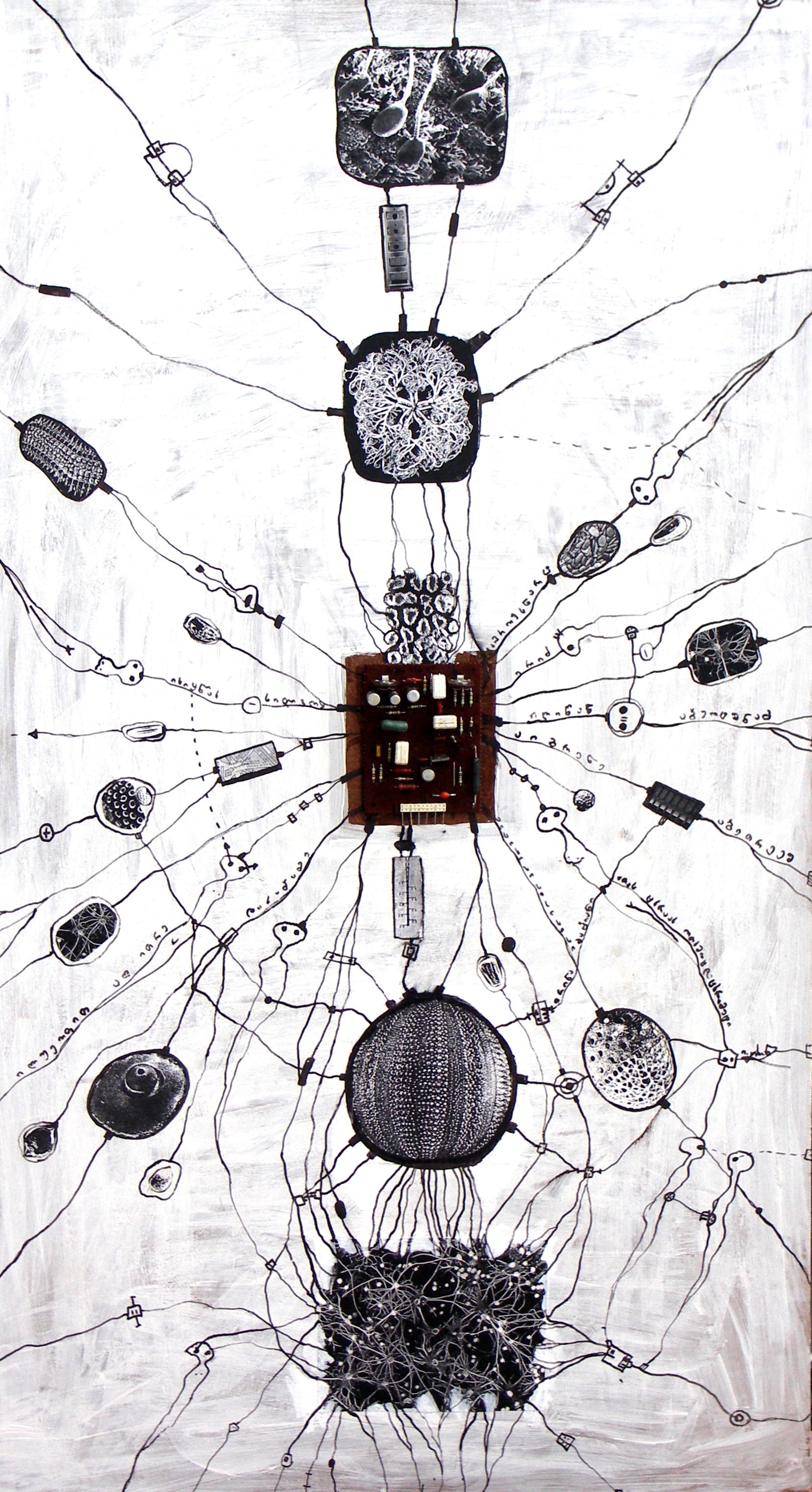
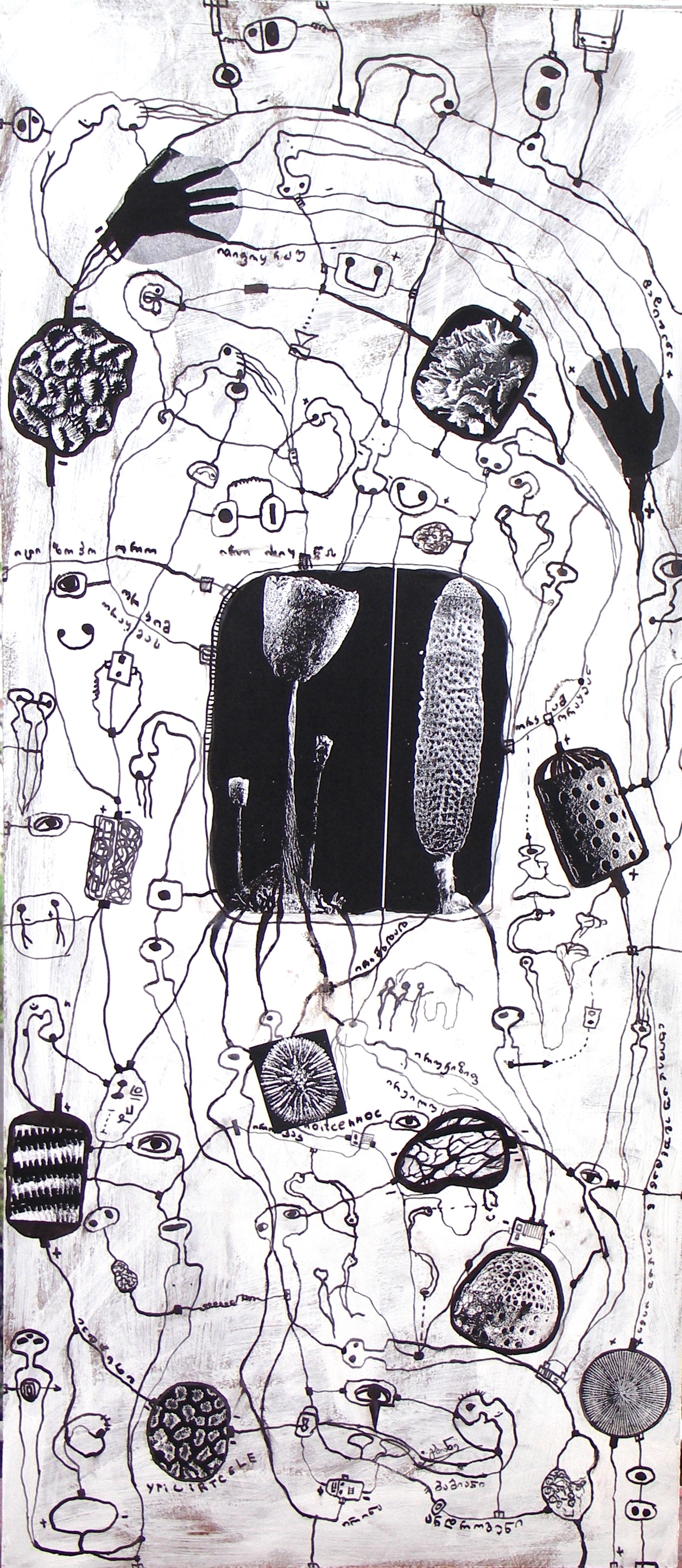
These connections expand across different scales and systems. Humans, microorganisms, blood vessels, fossils, technological elements, energy and cosmic forms begin to occupy the same visual space. In The Breath of Unnamed, a brain-like formation appears at the centre of an expanding network, connecting forms that move between the microscopic, the human and the cosmic. Recurring circles and circuits suggest circulation, balance and transformation.
The line becomes a fundamental means of connection. It continues, turns and transforms, often becoming another form rather than simply ending. Opposites such as plus and minus, organic and technological, personal and universal are brought into relation within the same structure.
Perception also becomes part of the work: a form may appear to be one thing while being another. Through painting, collage and photography, images, materials and experiences are repeatedly taken apart, reassembled and transformed.
Nothing from this period is left behind, but returns in different forms and contexts.