Relief Works and Assemblages
1998–2001: Electrical Components, Energy and Assemblage
Between 1998 and 2001, Irina Gabiani worked with old electrical components and found technical objects, developing two related directions: assemblages and relief works.
The starting point was the idea of two poles, positive and negative, whose interaction generates energy. In Gabiani's work, the electrical components stand for this concept of energy, the force that sets the universe in motion. She first used electrical wires and small television parts in her jewellery at the Gerrit Rietveld Academy, and later moved to larger components for objects and installations. She found them at flea markets and shops in Tbilisi and Turin, drawn to their colours, materials and structures. Some reminded her of aerial views of cities, with intricate lines and connections forming miniature environments. To her, the components carried their own energy, almost like independent pieces of jewellery.
She kept their original form, adding only small elements at most. She was interested in their histories too: many of these parts belong to a technological period that has passed, and some are no longer produced. In this she saw a link with her collages, where images cut from magazines preserve a particular moment in time.
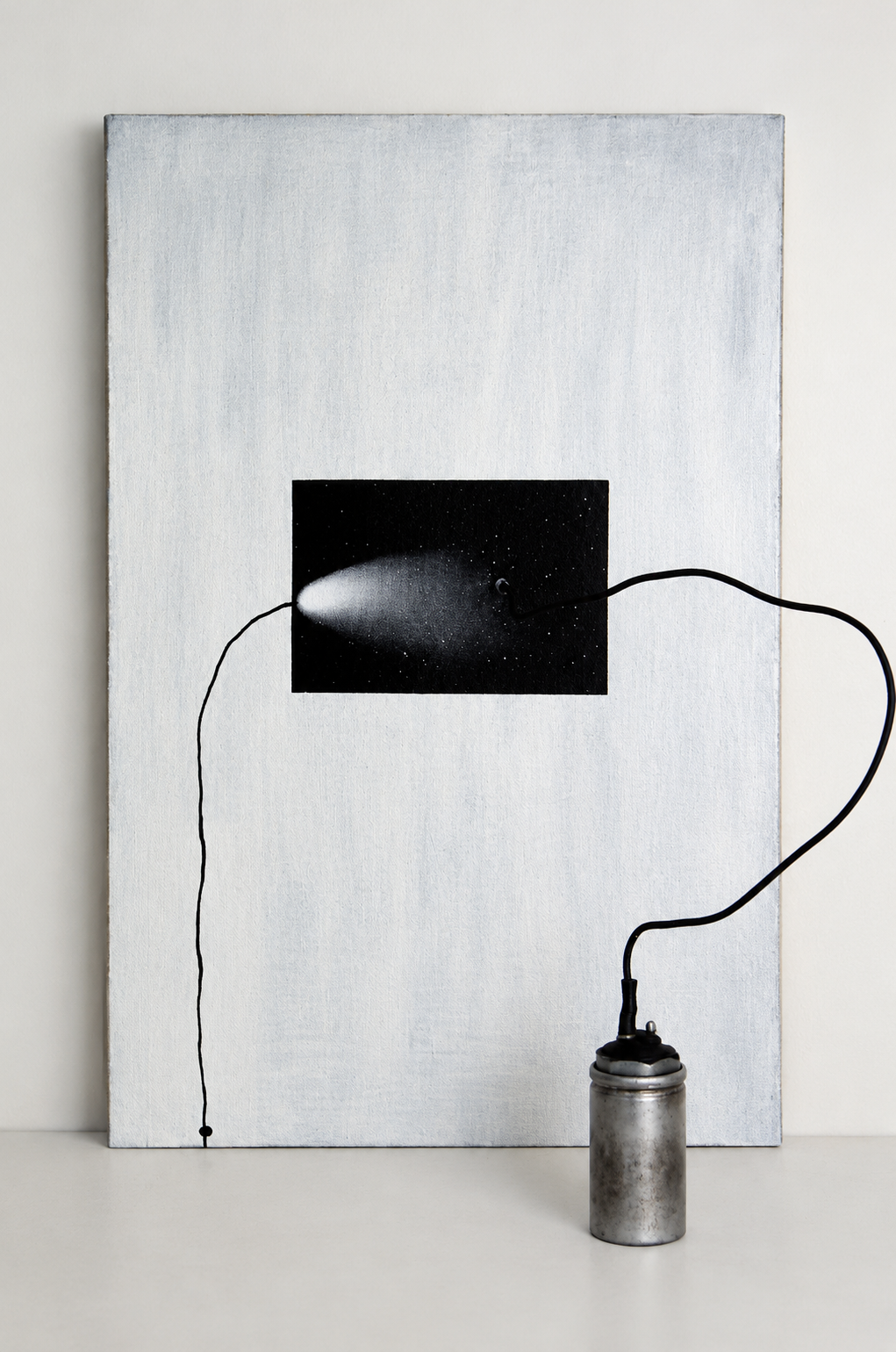
The assemblages are spatial works shown on or against the wall, some hung directly, others leaning. Radios, aircraft valves, light bulbs, television parts and a piece from an automobile pressure-measuring device are arranged on shelves or specially built supports, which become part of the composition. In some works, components are placed on MDF surfaces together with hand-drawn elements, following a method similar to her collages. The drawings sometimes continue the shapes of the components and sometimes stand on their own, bringing technology and drawing together on one surface.
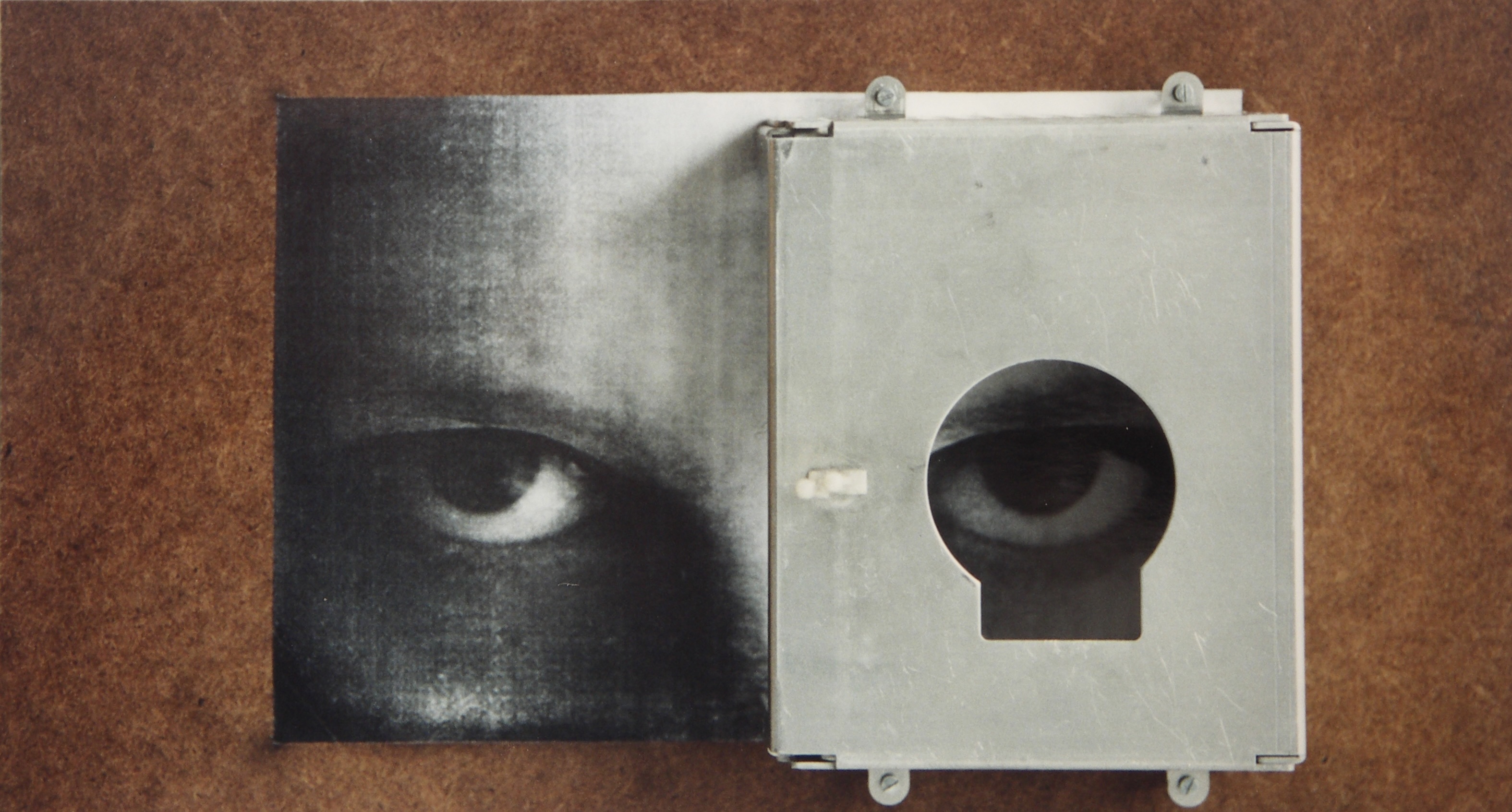
The relief works are entirely wall-mounted and combine electronic parts with sculptural elements. Many include white porcelain objects resembling biological forms, partly covered with matte Plexiglas. It blurs their contours, so the forms seem to dissolve gradually into the surface. This becomes a metaphor for the gap between appearance and reality, and for how our assumptions shape what we see. The same idea appears in Take Off Your Veil, which exists as both an artwork and a video piece, and in a series of self-portraits made from photocopies of the artist's photographs. In them, Plexiglas covers parts of the face: sometimes the eyes stay visible while the rest blurs, sometimes the eyes themselves are hidden.
In Listening to Nature, an aircraft valve becomes a symbol of harmony. Listening here means sensing and attuning to the rhythms and energy of nature, which connects to her broader idea of energy as the force that moves and sustains the universe.
Across these works, old technical objects carry both their own history and a new, symbolic meaning. Energy, memory and the limits of perception run through them all.